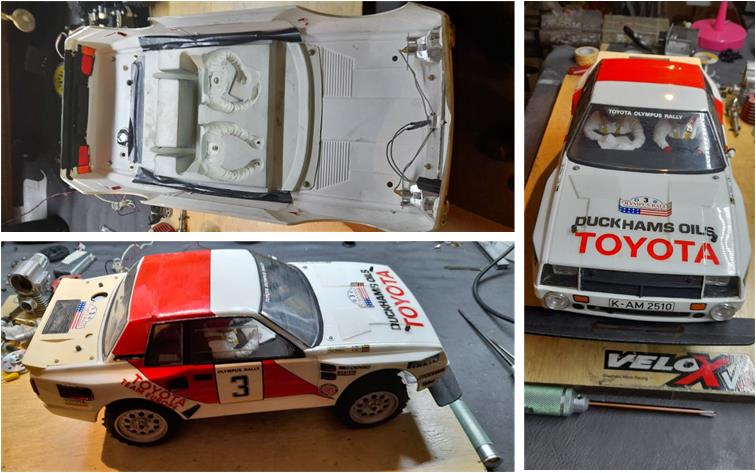
Model Tamiya Toyota Celica Gr.B, item number 58064, released in 1987 and available on the market until 1992 Lexan body shell in 1/12 scale, featuring a rally-style interior cockpit with driver and co‑driver, rear spoiler, two front fog lights, functioning front light cluster and driver’s side rear‑view mirror. 959 chassis
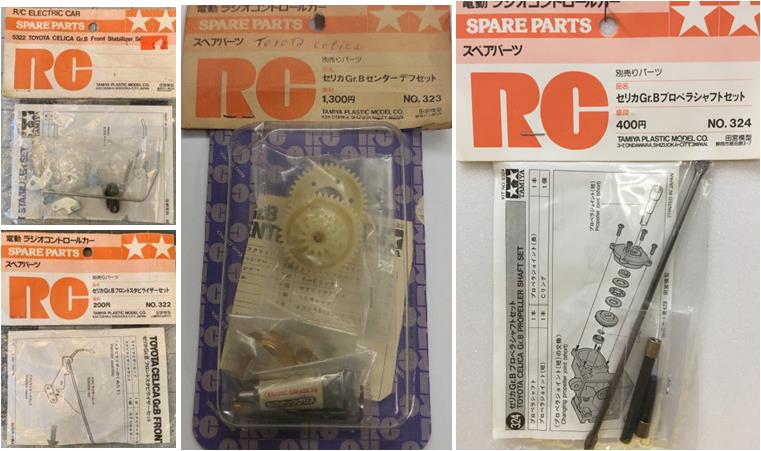
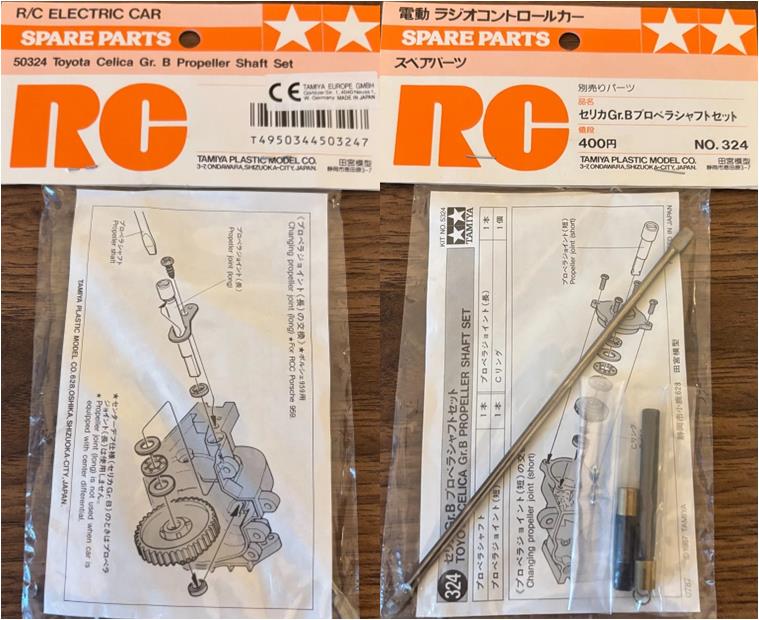
The 959 chassis is as compact and complex as it is prone to breakage; it consists of the front and rear gearbox housings, which are connected by the central section. Four‑wheel drive with independent suspension arms (the lower arms are the most delicate part of the chassis and are subject to frequent breakage). To keep the weight concentrated around the center of gravity, the receiver, the steering servo, the servo for the mechanical speed controller, the mechanical speed controller itself, the battery and the electric motor (for the first time factory‑equipped with the Technigold RX540‑VZ) are all housed in the central section. The four dampers were released exclusively for this chassis: aluminium bodies with a plastic tube serving as the oil reservoir (as of 2026, they have never been used on any other model). Model 58064 comes standard with a front anti‑roll bar (accessory code 50322 described as “Toyota Celica Gr.B Front Stabilizer Set”; image on the left), a ball‑type centre differential (accessory code 50323 described as “Toyota Celica Gr.B Centre Differential Set”; image in the centre) and a lightweight centre propeller shaft (accessory code 50324 described as “Toyota Celica Gr.B Propeller Shaft Set”; image on the right); these three refined technical solutions are optional accessories for model 58059 Porsche 959.
Toyota presented the Celica in 1983 and used it until 1986, the year in which rally regulations changed and Group B was eliminated. It won several African rallies, earning the nickname King of Africa: the Safari Rally and the Rallye Côte d’Ivoire. It was equipped with a front‑mounted, longitudinally installed inline 4‑cylinder engine with a displacement of 2090 cc, turbocharged, 8 valves, a 5‑speed manual gearbox and rear‑wheel drive.
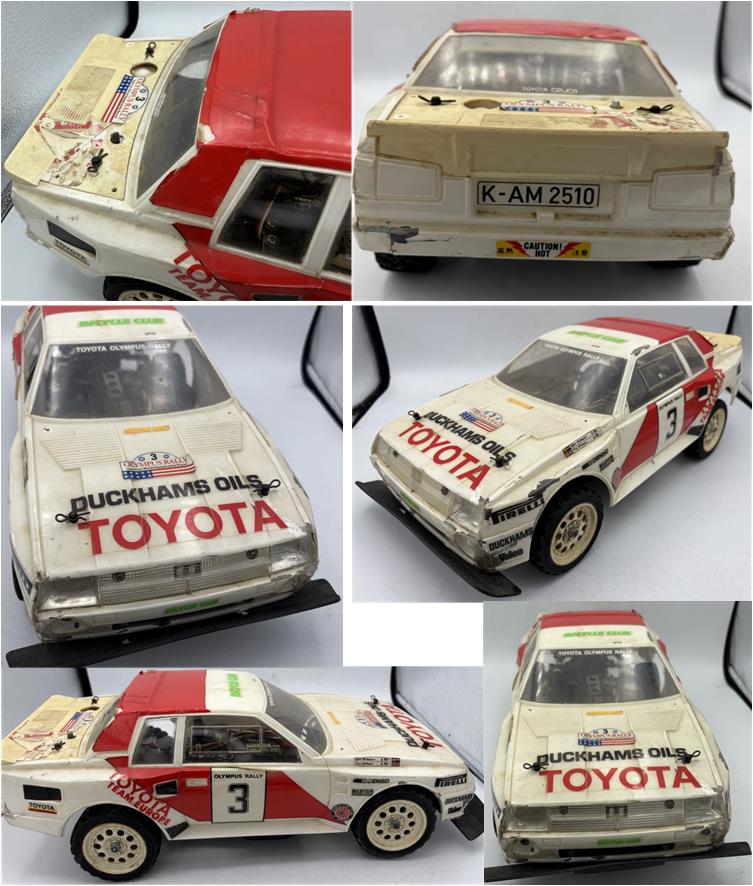
Project Over the years, several lots of parts, chassis and body shells have been collected for the 959 chassis (Porsche 959 and Toyota Celica Gr.B). The parts gathered were used to restore two 58059 models and form an excellent starting point for building a 58064 model. The goal is to build a Toyota Celica Gr.B made of new or like‑new parts: a true queen of the shelves, capable of looking its best. For this project, the leftover parts from the restoration of the two Porsche 959s were not enough, so two complete 58064 models with chassis and body shell were purchased. This makes it possible to use the first model as a donor to achieve an optimal restoration of the second model, both in terms of body and chassis. The first model (the donor) has a body shell in poor condition (see the online listing images); however, it includes the front light cluster, interior cockpit and rear spoiler. The two front fog lights are missing. The body shell was not finished properly (see the trimming of the front and rear lights), but the main issue is that both front corners each have a clean crack, likely caused by a frontal impact. The larger crack is on the right side.
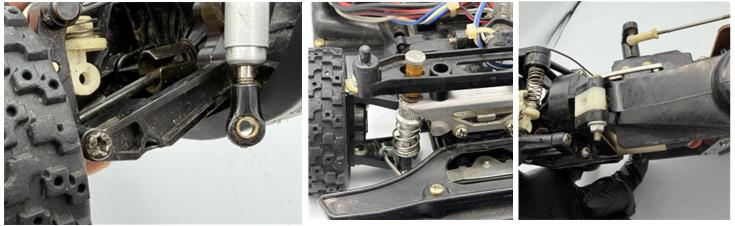
The first chassis (the donor) is complete in all its parts, including the mechanical speed controller, recognizable by the plug for the front lighting system. The two lower front and rear undertrays show several signs of impact with the road surface. As per factory equipment for chassis 58064, the front anti‑roll bar is installed, along with the ball‑type centre differential and the lightweight propeller shaft between the front and rear gearbox housings. However, it has some localized breakages in the lower right rear suspension arm (first image), in the lower right front suspension arm (centre image) and at the junction between the central chassis tub and the right‑side rear section (last image). It can be inferred that the chassis suffered an impact on the right side, resulting in the breakage of parts that were never replaced. It is not possible to determine whether a single right‑side frontal impact caused both the chassis and the body shell to break at the same time, but the most significant damage on the body shell is also on the right side.
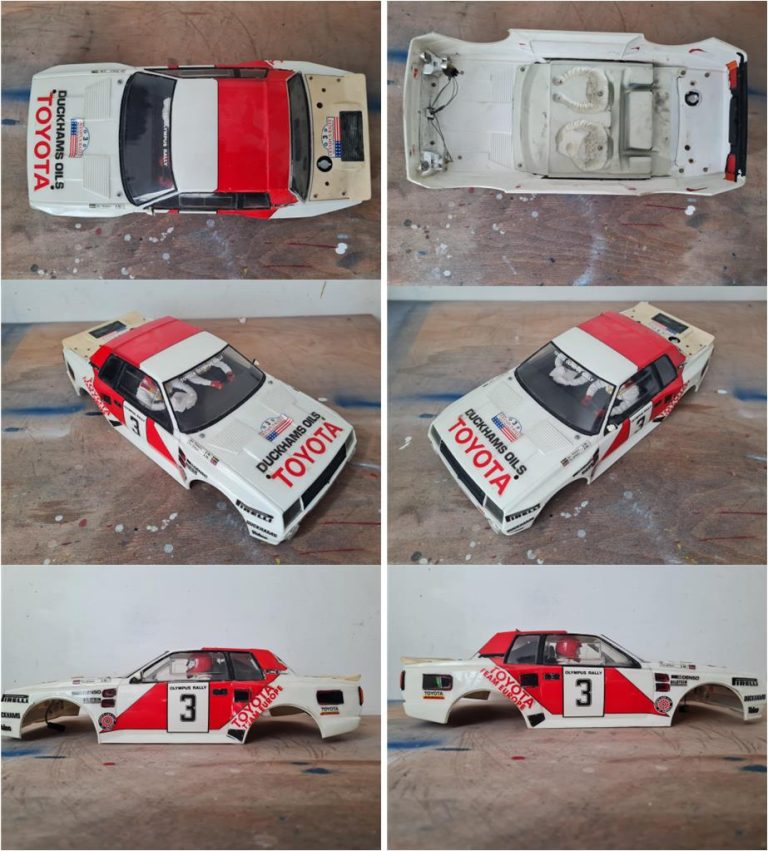
The second model has been preserved much better: the body shell (images taken from the online listing) is in excellent condition and appears to have never been used on track or off‑road. Whoever applied the decals and paint clearly has good manual skill: the result is excellent. All ABS accessories are present (rear spoiler, front fog lights and rear‑view mirror), as well as the lighting system and the interior cockpit. The body shell must have been on display for quite some time, because the plastics have changed colour (the white has shifted toward an off‑white) due to vapours present in indoor environments (disinfectants, perfumes, various aromas…) and sunlight exposure (the UV component ages the material).In practice, these signs show that the model is original from the 1990s; this patina will not be altered, even though it would be possible to remove the rear spoiler and repaint it white.
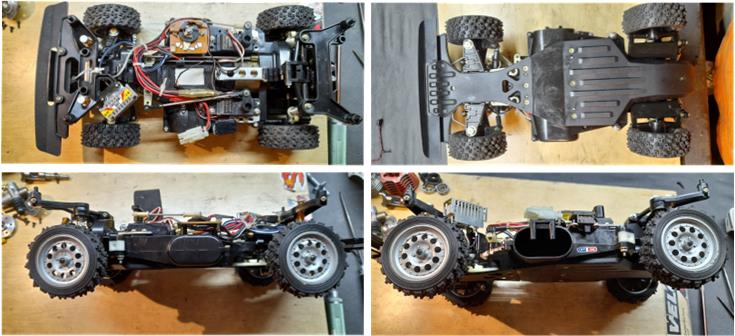
The second chassis associated with this second body shell is in excellent condition and shows no visible damage or impact marks. The mechanical speed controller is the standard unit, equipped with the electrical connector for the front lighting system. The tyres appear to be in excellent condition and the wheels show no impact marks (image in the last row). The front I‑shaped and rear T‑shaped undertrays (both different from those of the Porsche 959) show no signs of wear: they look as if they have just come out of the factory (image on the right of the first row). The receiver for the electronics is missing, but the two servos controlling the steering linkage and the mechanical speed controller are present (image on the left of the first row).
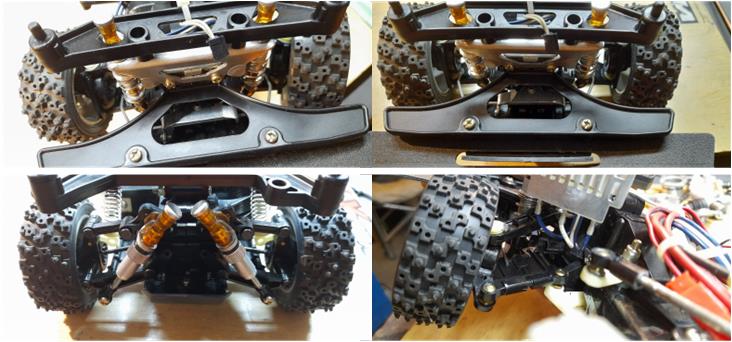
The front anti‑roll bar is present (first‑row image), which is standard factory equipment for chassis 58064, whereas it is an optional accessory for the 58059. All suspension arms are in perfect condition (front axle in the first‑row images and rear axle in the second‑row left image) and the linkages of the dual‑arm steering system are also intact (second‑row right image).
The chassis configuration corresponds to that of the Toyota Celica Gr.B, which differs from the Porsche 959 in the following parts:
– rear T‑shaped undertray – front I‑shaped undertray front anti‑roll bar installed on the front axle (developed specifically for the Toyota Celica Gr.B; for the Porsche 959 it is available as an accessory, item number 50322) – central position of the power resistor for the mechanical speed controller – front body‑post support plate – ball‑type centre differential (developed specifically for the Toyota Celica Gr.B; for the Porsche 959 it is available as an accessory, item number 50323) – rear body‑post support plate – propeller shaft transferring drive from the rear axle to the front (see image; developed specifically for the Toyota Celica Gr.B; for the Porsche 959 it is available as an accessory, item number 50324)
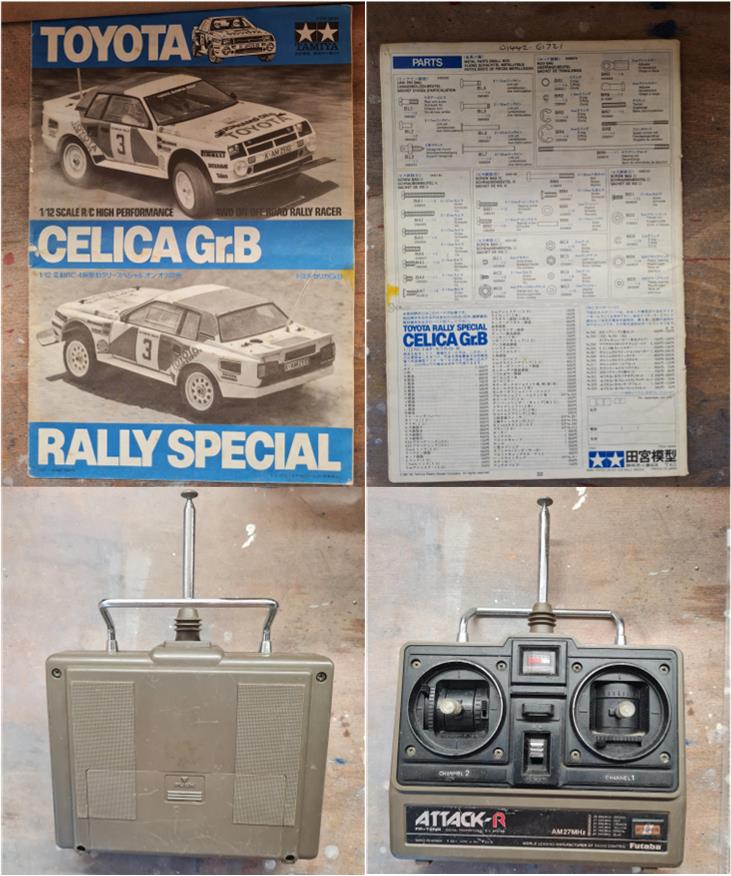
The instruction manual (first‑row images) and the Futaba remote controller (second‑row images) are included to complete the restoration, perfectly matching the electronics installed on the second chassis.
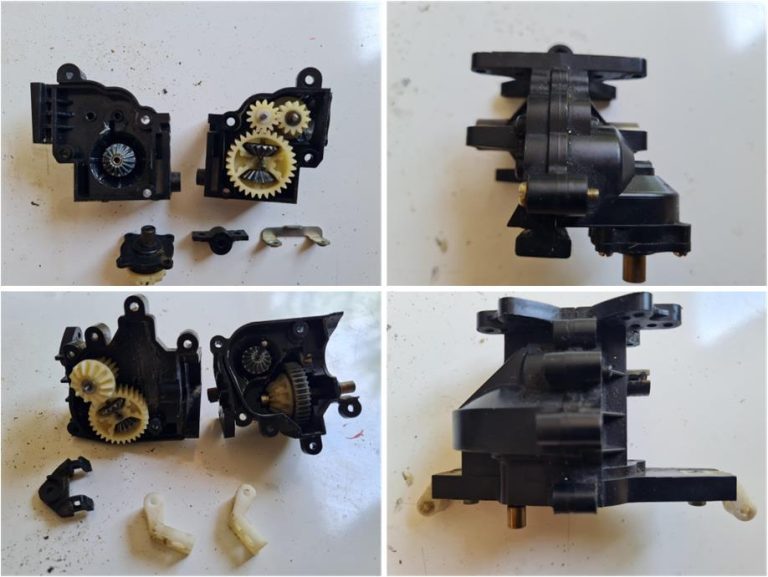
Chassis restoration All parts appear visually new and show no signs of wear. Nevertheless, a proper regeneration process necessarily requires disassembling the chassis to check for broken or non‑original components that are not visible when the model is fully assembled. There is no need to wash or restore the parts, as they show no signs of dust or oxidation. It is sufficient to clean them with a kitchen paper towel to remove the thin layer of dust accumulated over time. Some parts were inadvertently covered in grease, which then attracted and held dust; over time, this formed a thin layer that protected the plastics from sunlight UV rays and vapours such as perfumes. Model number two must have been stored in a display case or cabinet for all this time. Reassembling the chassis is simple because all parts fit together perfectly and none have deformed over the years. In the end, 90% of the parts come from the second chassis; only a few linkages and white Teflon components were taken from the first donor chassis. The first parts to be assembled are the front differential housing (first row) and the rear differential housing (second row).
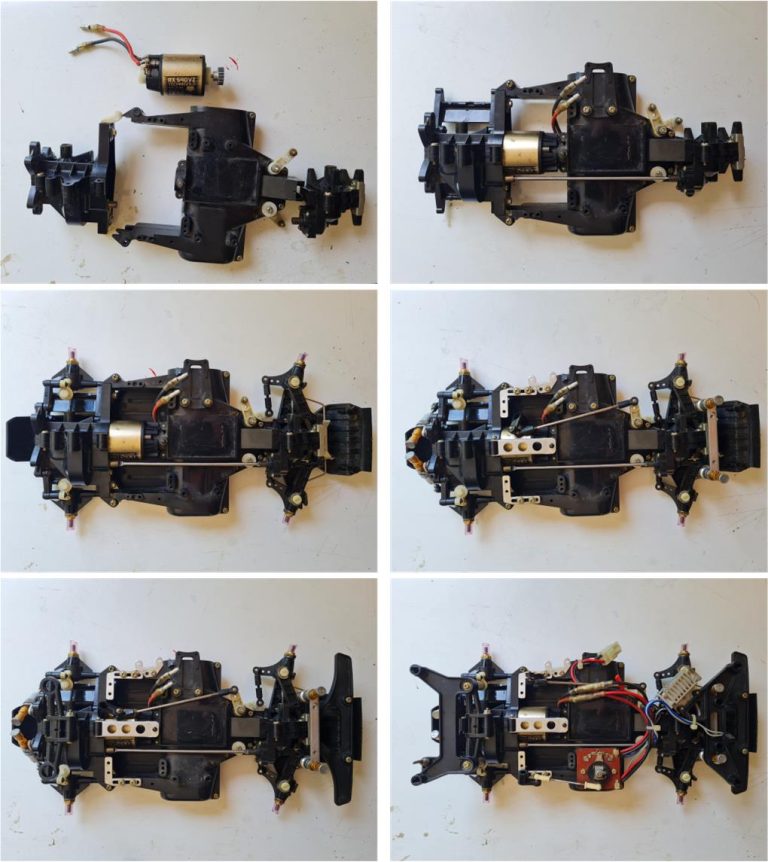
The front and rear sections must then be joined with the central chassis section, which also includes installation of the motor. The control electronics (two servos, receiver, speed controller and resistor) and the batteries are all installed close to the center of gravity. The central tub shows slight signs of age, so it was first treated with polish and then finished with wax.
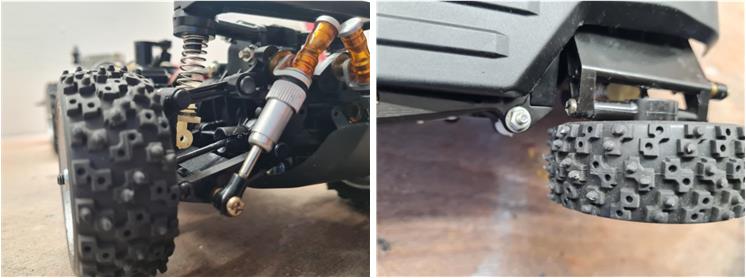
The tyres show no cuts or cracks, but they are rather stiff. Time has reduced their performance and they can be regenerated through a full glycerine treatment. Leave the tyres, complete with their wheels, immersed for one week in a container filled with glycerine. Once this first phase is complete, allow the excess glycerine to drain from the tyres and finally, for an additional week, use several kitchen paper towels to mechanically remove the last drops of glycerine that have been absorbed and emulsified by the rubber. The full treatment lasts three weeks and in this way the rubber becomes soft and elastic again. The tires are so new that they still retain the tread blocks (see images).
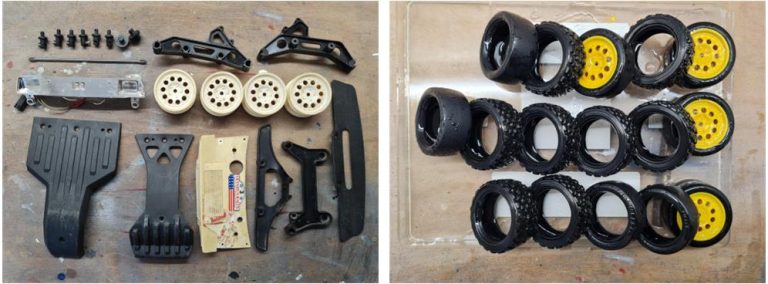
All the parts that were collected and not used at this stage are stored together with the model (left image): the front plate for supporting the two body‑post towers, the rear plate for supporting the two body‑post towers, the body‑post towers, the T‑shaped rear undertray, the I‑shaped front undertray, the double front bumper, the front lighting system complete with bulbs, the front and rear sections of the driveshaft, the body‑mount towers, the rear plate for the body‑mount towers, four complete wheels with white rims (the Porsche 959 has yellow rims) and rally tyres (the wheels are not shown in the photo because they are still soaking in glycerine, right image).
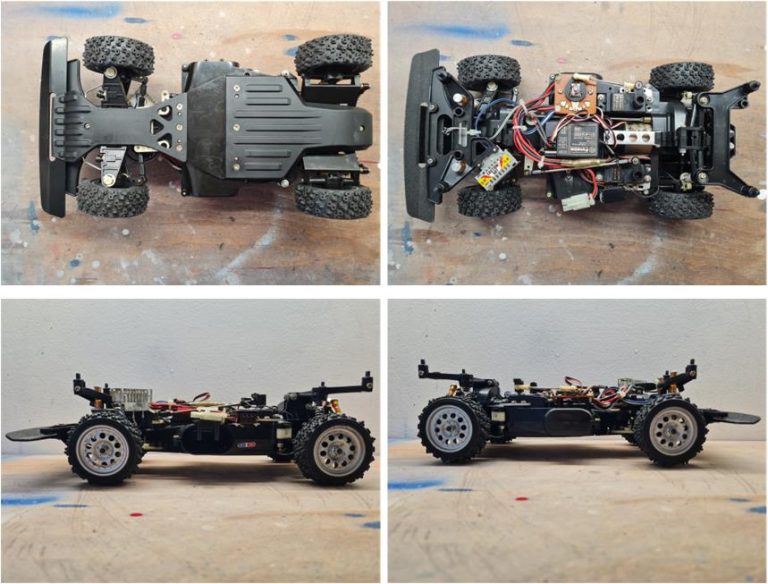
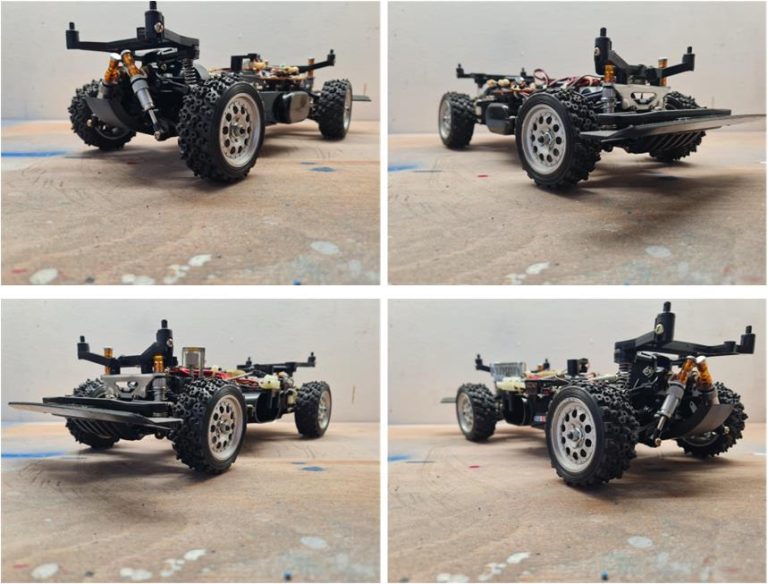
Images of the fully assembled chassis. Both underbodies are free of marks or breaks (left image in the first row), the rims show no signs of lateral impact damage (second‑row images), the electronics are complete in every part, including the plug for the front lights (right image in the first row) and the front bumper is intact with no signs of wear.
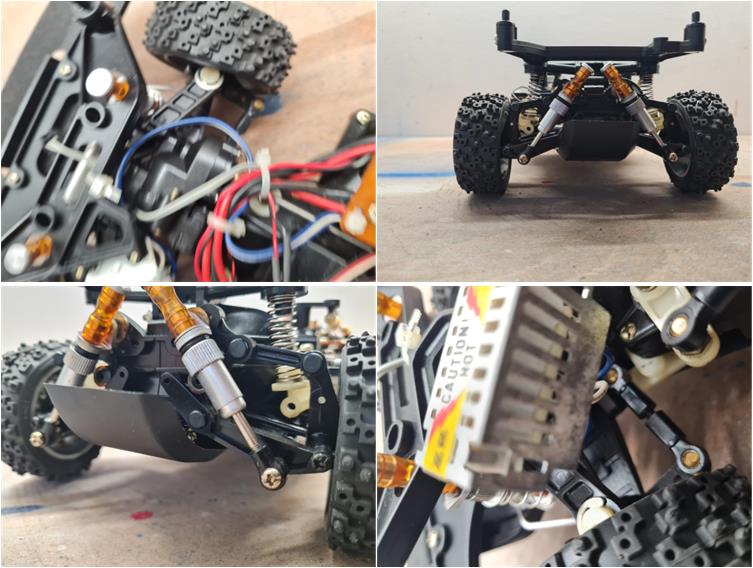
The suspension arms are all intact and show no breaks or cracks (see images).
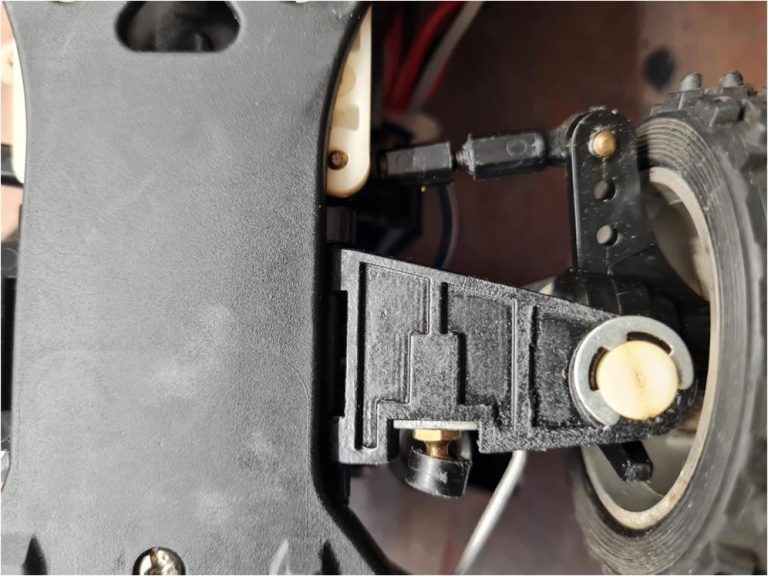
When inspecting the chassis, it became clear that the lower front suspension arms are parts reproduced with a 3D printer. This is a typical situation when buying material online and it is not possible to verify its condition. One must rely on the seller, who sometimes is simply not completely honest and omits such details. Fortunately, an original spare left arm is available, but one of the two arms (the right one) will remain a 3D reproduction (even if well made). The 3D‑printed arm is an excellent reproduction, but in the image you can see the typical lines left by the printer during the construction of the part.
Body
The body shell is in perfect condition and requires no treatment. Wiping the outer surface with a slightly damp kitchen paper towel is enough to remove the thin layer of dust that accumulated over time. The donor body shell is in very poor condition, but it is kept aside for possible use on the second chassis and to preserve the lighting system, rear spoiler and interior cockpit.
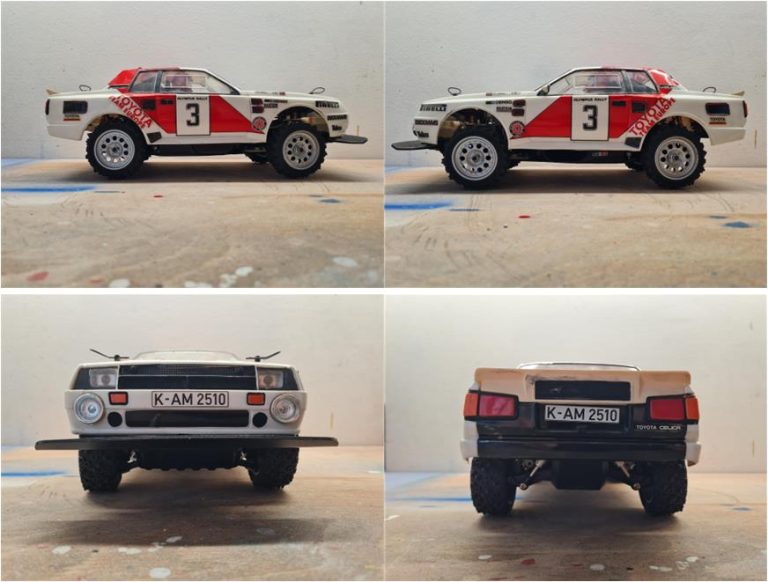
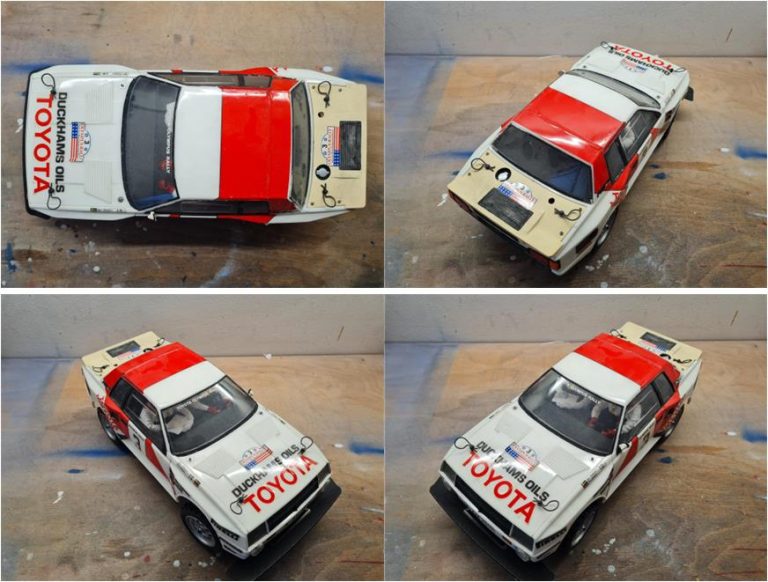
Restored model Images of the complete model; it appears as if it were assembled and placed on a shelf.
Tamiya, original figure, box art, guide book and catalogue are of TAMIYA INC, which does not endose or sponsor www.tamiyaclassic.com. Any brands, logos and trademarks represented on this website are the copyright of their respective owners.