Model Tamiya Porsche 959, model number 58059, released in 1986 and available on the market until 1992 1/12‑scale Lexan body shell. 959 chassis
This restoration project was developed together with the one for model 58059 Mk1.
Project The goal of this project is to regenerate a chassis that is fully functional. The restoration is conservative: the car retains all signs of use, with only damaged or excessively worn parts being replaced. This activity is relatively simple and corresponds to a normal extraordinary maintenance operation that should be carried out at least once a year. The most complex chapter is selecting the original parts.
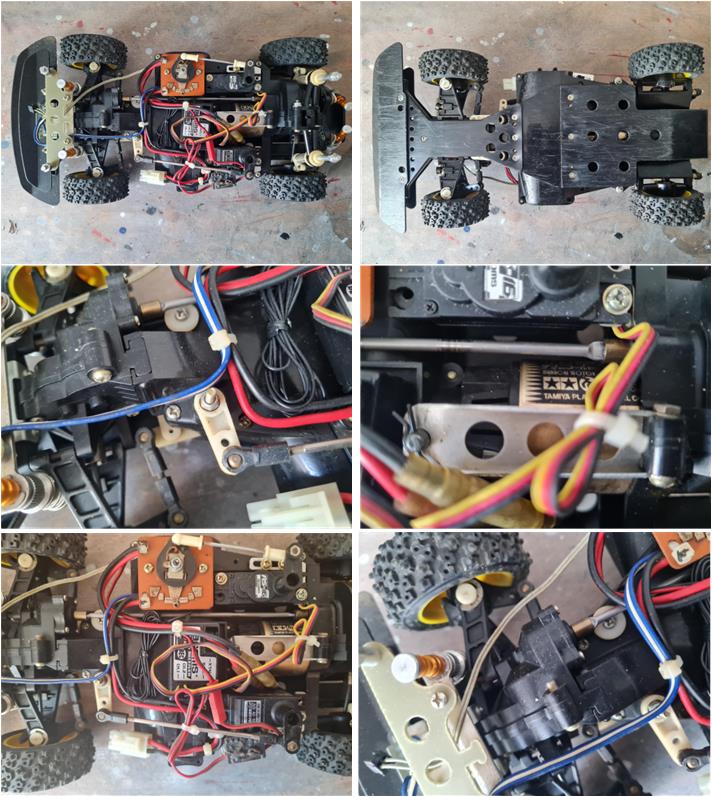
Chassis regeneration A chassis that appears to be in good condition is available, so the model is disassembled to check for hidden damage. The plastic parts and metal hardware are in excellent condition and very clean: no treatment is required other than wiping them with a kitchen paper towel to remove the layer of dust. After confirming that the chassis is in order and there are no surprises (such as damaged or non‑original parts), reassembly of the chassis can begin. Once assembled, the chassis appears in good condition: the individual parts are worn but perfectly capable of performing their function:
– the image on the left of the first row shows the rebuilt chassis from above, – the image on the right of the first row shows the rebuilt chassis from below and the image on the left of the second row shows the delicate linkage for the dual‑arm steering system.
Complete the chassis by installing the electronics, consisting of the mechanical speed controller with connector for the lighting system, which is exclusive to the 959 chassis (image on the left of the third row), the steering servo, the servo for the speed controller, the receiver and the Technigold motor (image on the right of the second row).
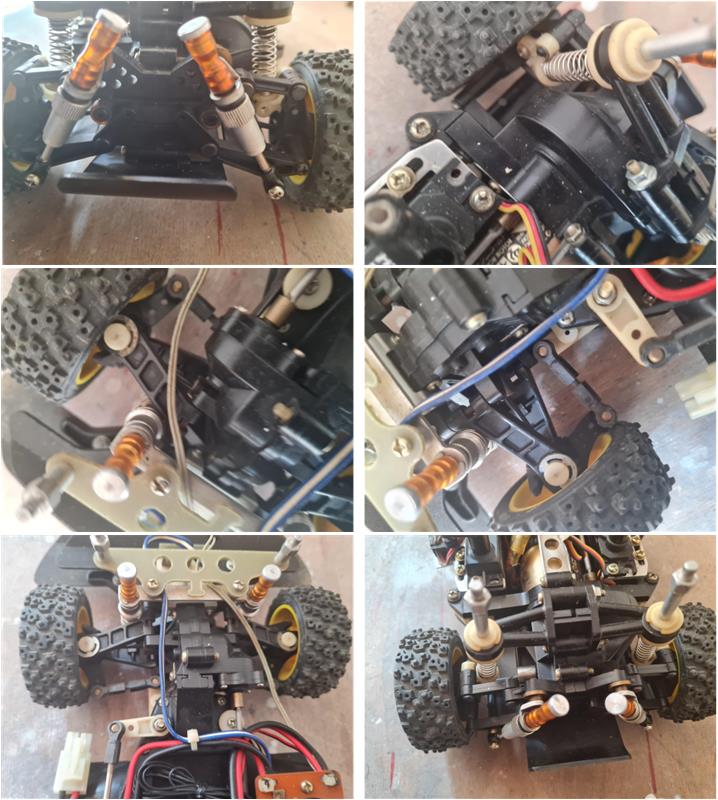
The chassis has all four suspension arms intact; these are the most highly stressed components and the ones that break most easily. All upper and lower arms are the Mk2 version, featuring the tabs that act as end‑stops for the steering knuckle. The two steering knuckles are also Mk2 versions, equipped with T‑shaped end‑stops. Before installing the arms, check that there are no micro‑fractures at the shock absorber mounts or at the mounts on the differential housing. Today (2026) it is practically impossible to find new parts, but the market offers many 3D‑printed reproductions. In this case, it was not necessary to replace any of the suspension arms.
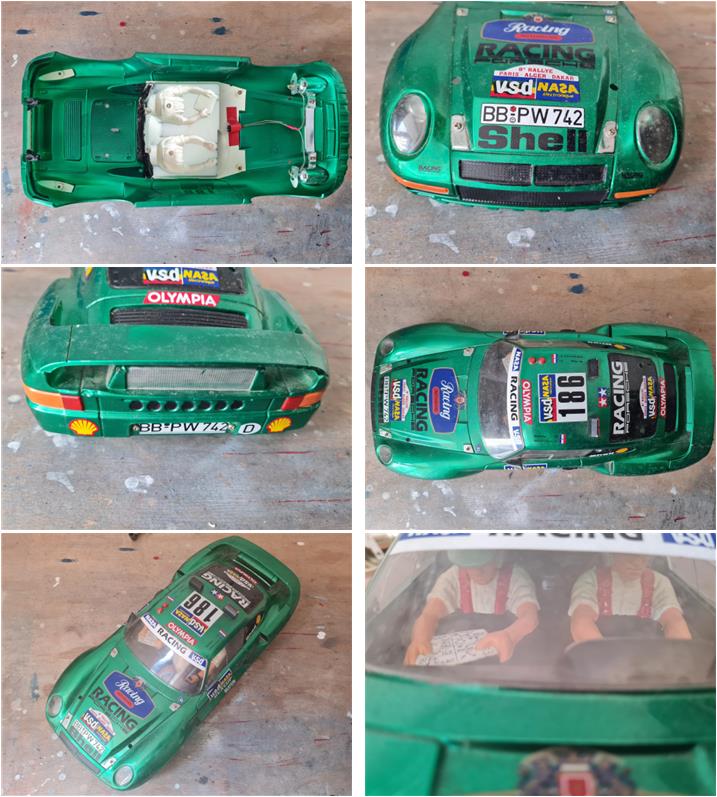
Body shell Once the chassis has been completed, assess the available body shells to choose the one or ones that best suit this project. Over the years, a total of three body shells have been collected: a new clear Lexan shell still to be finished, one with the original blue‑white livery featuring “Rothmans” as main sponsor and one with a green livery featuring “Racing” as main sponsor. The first body shell is reserved for the Mk1 project. Therefore, for this chassis the other two shells were selected. The body shell with “Racing” as main sponsor came with the regenerated chassis above and the previous owner painted the Lexan in a colour that can be described as metallic green. The body shell is complete with interior cockpit, ABS details (dual rear‑view mirrors, rear spoiler, twin roof lights on the cockpit and engine exhaust tip) and a full front lighting system. This body shell is perfectly intact, with no marks or cracks; repainting would be possible, but these shells are so thin that it is better not to subject them to unnecessary operations. Aesthetically, the metallic green may or may not appeal, but the body shell is certainly one of the best‑preserved examples I have seen to date (2026).
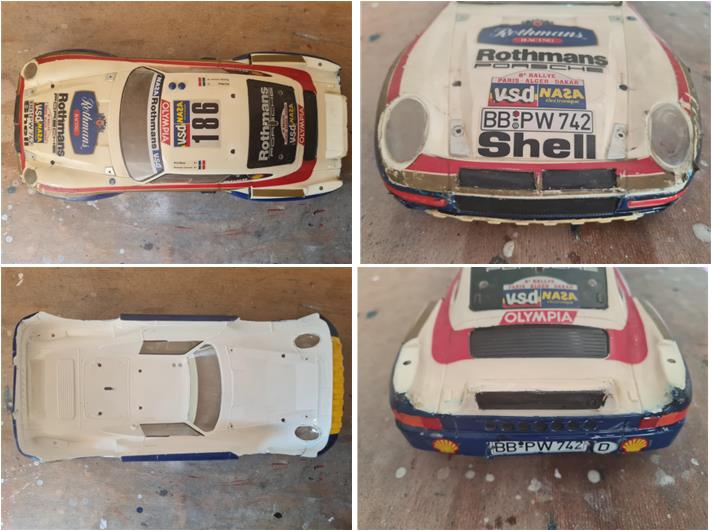
The second body shell retains the first livery with “Rothmans” as the main sponsor (the first version released for sale for only a few months) and does not include the ABS accessories (dual rear‑view mirrors, rear spoiler, twin roof lights on the cockpit and engine exhaust tip). The body shell clearly shows the passage of time, which has not been kind to the decals. This second body shell is stored together with the chassis and the first shell because it is difficult to decide which of the two suits the chassis best.
Tamiya, original figure, box art, guide book and catalogue are of TAMIYA INC, which does not endose or sponsor www.tamiyaclassic.com. Any brands, logos and trademarks represented on this website are the copyright of their respective owners.