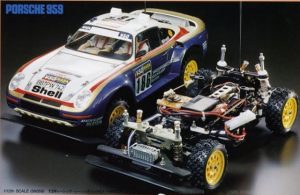
This family is named after the first model that was released for sale; two models are equipped with the 959 chassis:
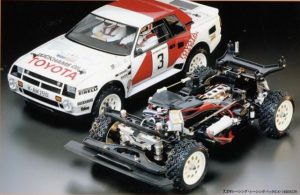
– Porsche 959 model number 58059, released to sales in 1986 and available on the market until 1992 – Toyota Celica Gr.B model number 58064, released to sales in 1987 and available on the market until 1992
This model rightfully enters the golden age of Tamiya, which includes the first 100 models with a single extension represented by those models that are an evolution of the first 100. These are the specifications of this family;
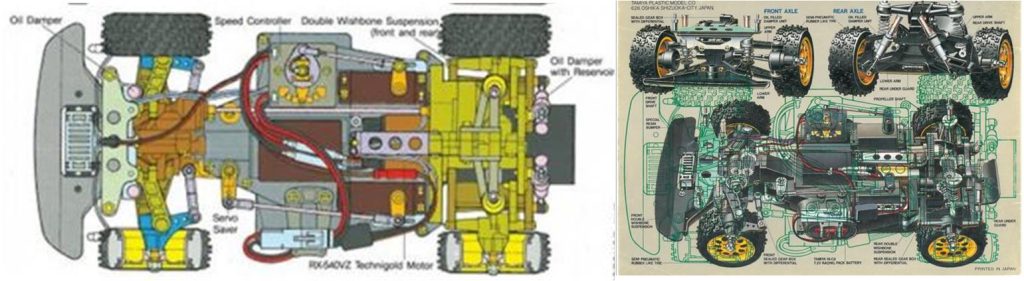
– 4WD – four-wheel drive with independent suspension (a very delicate part) with coil springs and oil shock absorbers (a system that was no longer used on other Tamiya models in 2023) – plastic monocoque chassis, – standard ball bearings, – rubber wheels based on the tread of rally road wheels, – front light system (also a first for Tamiya) that were powered from the main battery via a special connector of the MSC – mechanical speed control system that was developed only for this chassis and – RZ-540VZ Technygold electric motor
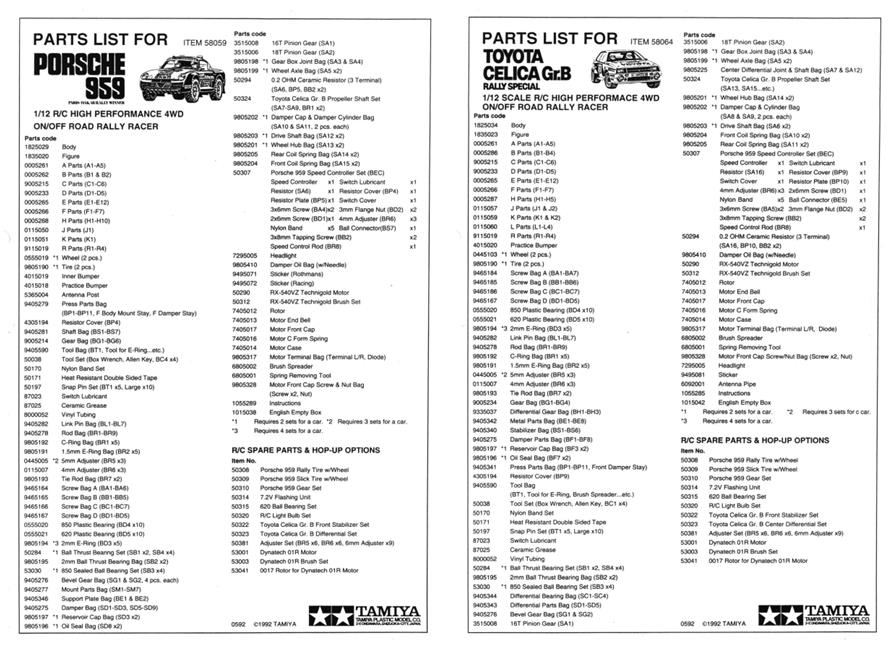
The monocoque plastic chassis was developed especially for this model with a wheelbase of ~210 mm in order to be able to install the 1/12 scale body against the normal 1/10 scales developed up to that time. The development of this model must surely have been an engineering challenge for Tamiya, which until then had mainly launched pure off-road or road-going models on the market. With the Porsche 959 a new solution was introduced that could be used on asphalt as well as off-road. Another challenge was to be able to reduce the size of the mechanics to comply with the dimensions of a 1/12 scale car: the motor was installed centrally with the two servos for steering and the MSC – mechanical speed control system – on the side. Parts list of both models:
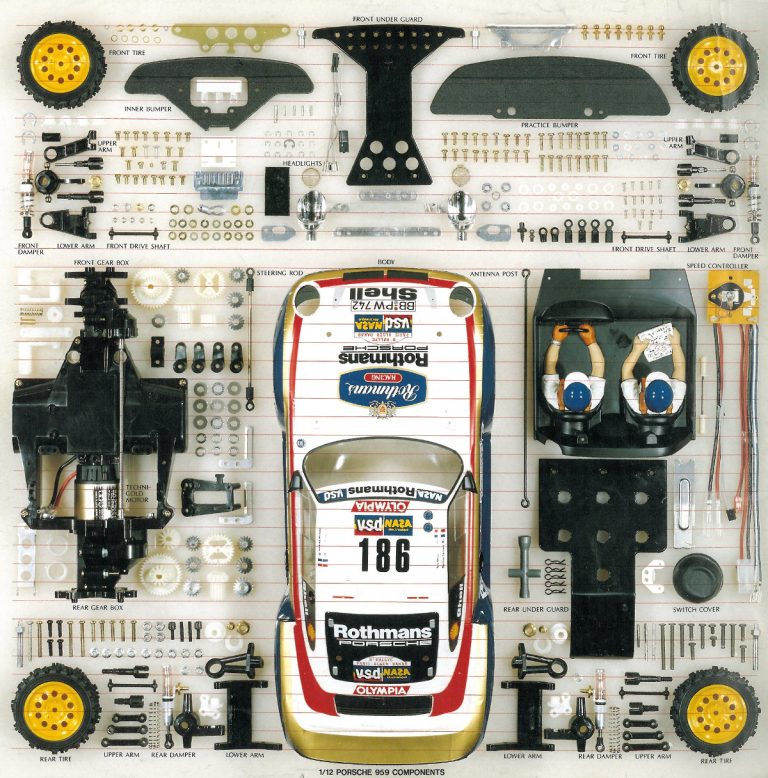
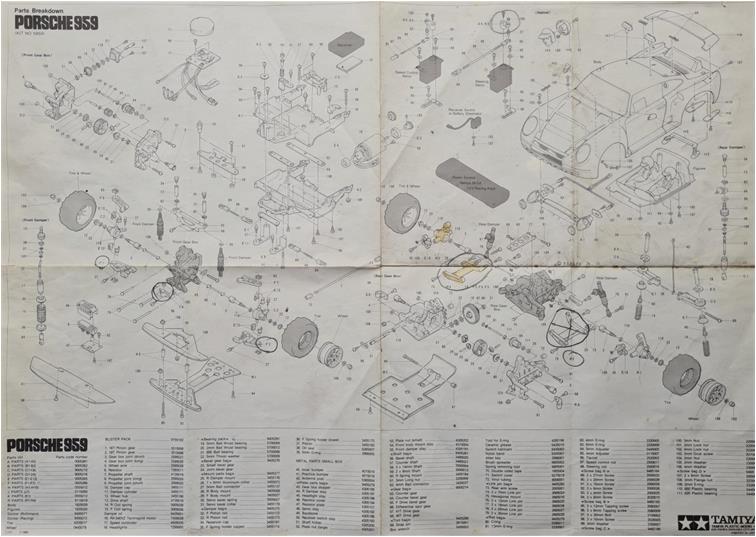
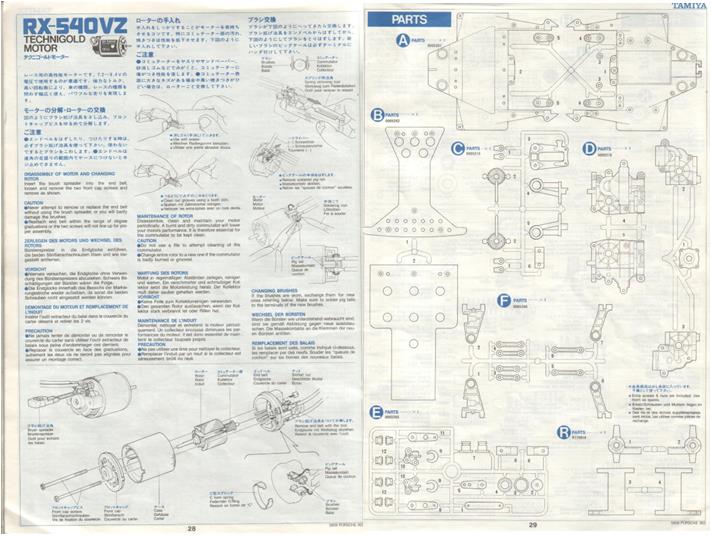
Porsche 959 Definitely state-of-the-art for radio model design, see picture of the parts of this car taken from a 1987 Tamiya catalogue.
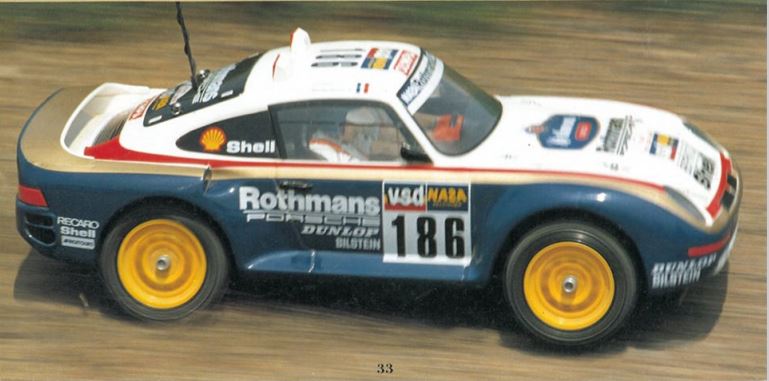
The Porsche 4WD rally car that took part in the Paris Dakar reproduced in 1/12th scale was one of the first models with a polycarbonate-lexan body with the most details: for example, the door handles of the car as they were carefully reproduced. Until then, lexan bodies were obtained by mechanically pressing a sheet of lexan onto a hot mould to reproduce the desired shape. Once the parts cool down, the lubricant previously sprayed onto the mould allows the shaped sheet and the mould itself to separate. The body of the Porsche 959 features a front nose and sides designed to fit within the contours of the car, curves that were impossible to achieve with a standard mould. In order to be able to produce the body so well finished and with the right shape, Tamiya had developed a complex system of moulds in which the Lexan sheet was pushed ‘blown’ by a flow of hot air that acted homogeneously to make the lexan sheet adhere to all the surfaces of the mould. Only in this way was it possible to obtain all the details that had been designed. The mould was then opened in two parts so that the finished body could be taken out. The system worked very well, but led to different body thicknesses. Today these shapes are achieved with a multi-mould system. This body was one of the strengths of this model, but over time it proved to be a weak point; many parts were so thin that they would break on first impact. It can be said that the body was as well made as it was fragile.
The variable thickness of the body was not the only sore point, because the colour scheme was two-tone with several parts to be added later:
– rear headlights on the roof of the car – rear spoiler, – driver + navigator, – rear view mirrors, – rear engine exhaust system and front light system. Everything described made the body delicate and at the slightest impact they could break at these points:
– front bumper, – right and left front wheel arches, – right and left rear corner where the spoiler was housed.
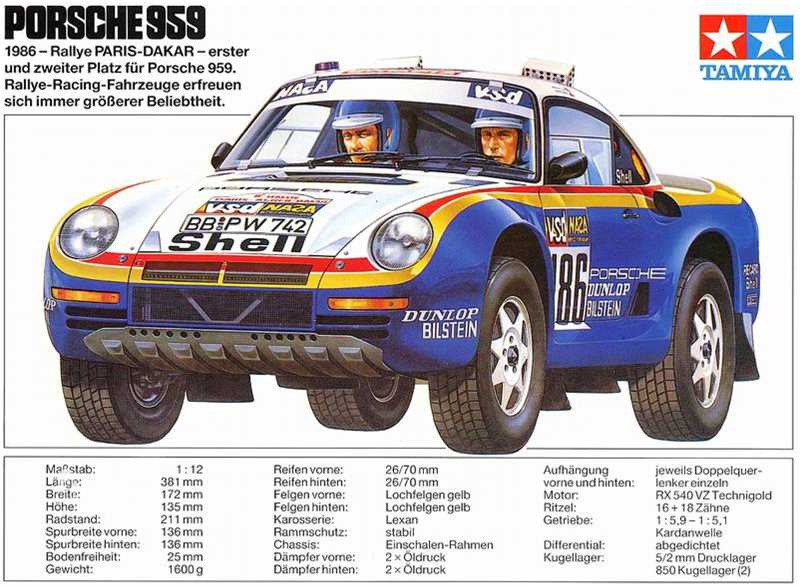
There are two series of stickers; the older one had the cigarette brand Rothmans as main sponsor, then to avoid contravening the laws of some countries against tobacco advertising after a few months from release Rothmans became Racing. There are a number of advertisements that Tamiya or the various importers around the world have published in trade magazines, in the image below is an example in German showing all the construction data of the model.
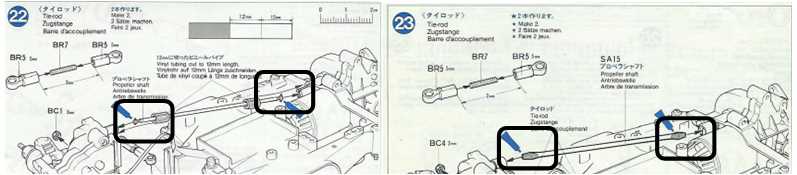
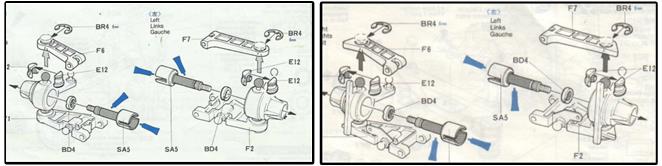
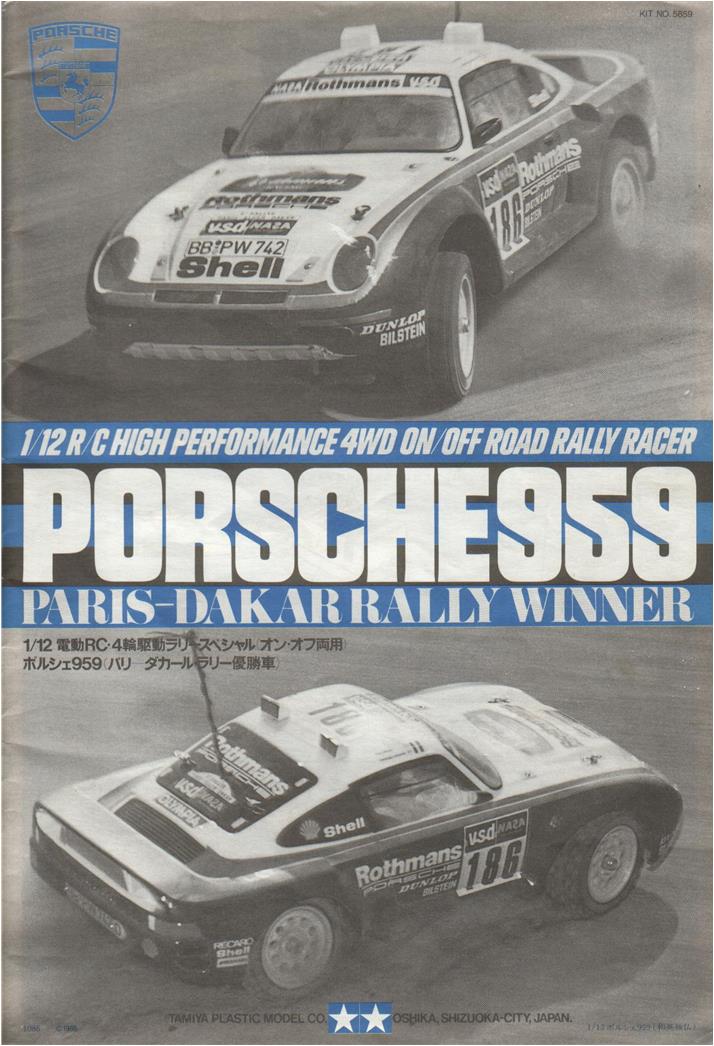
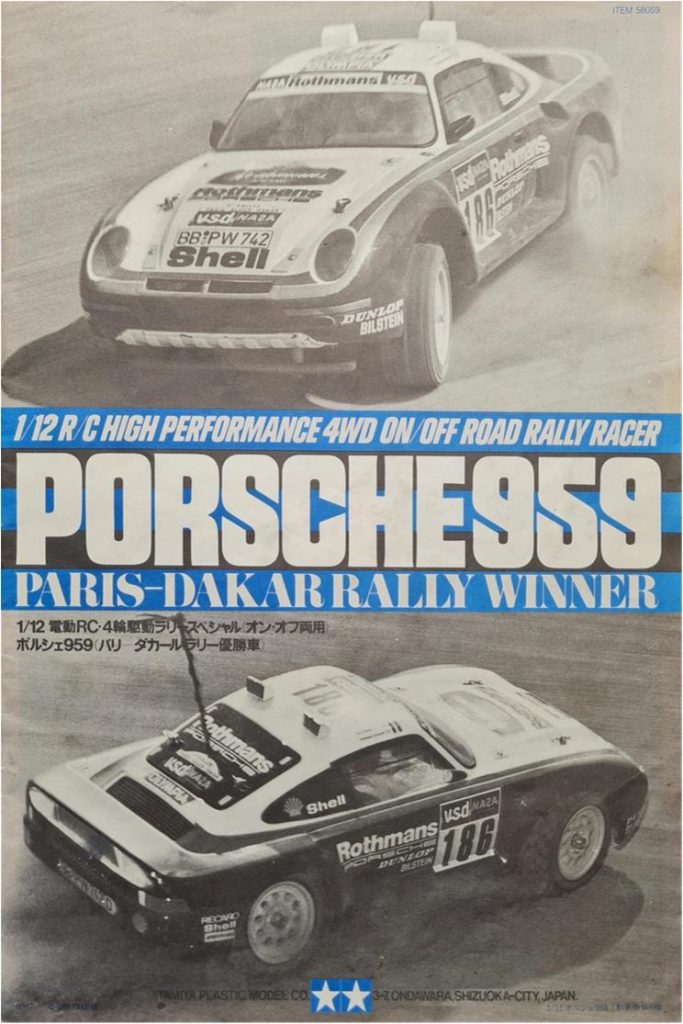
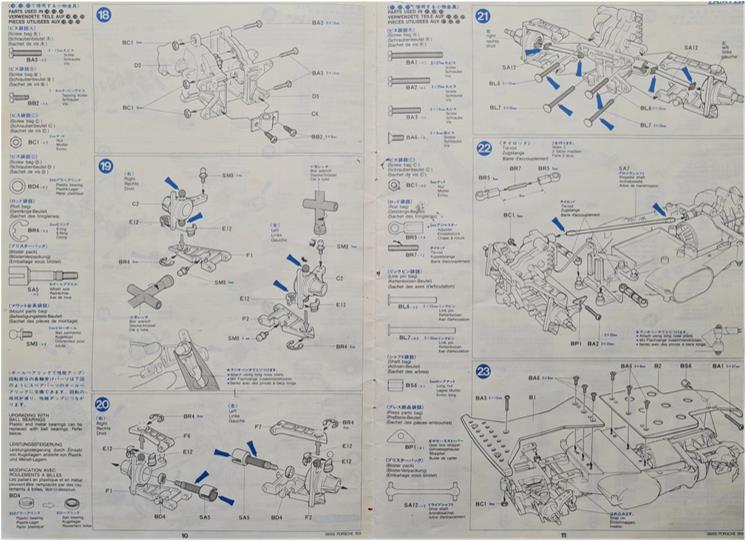
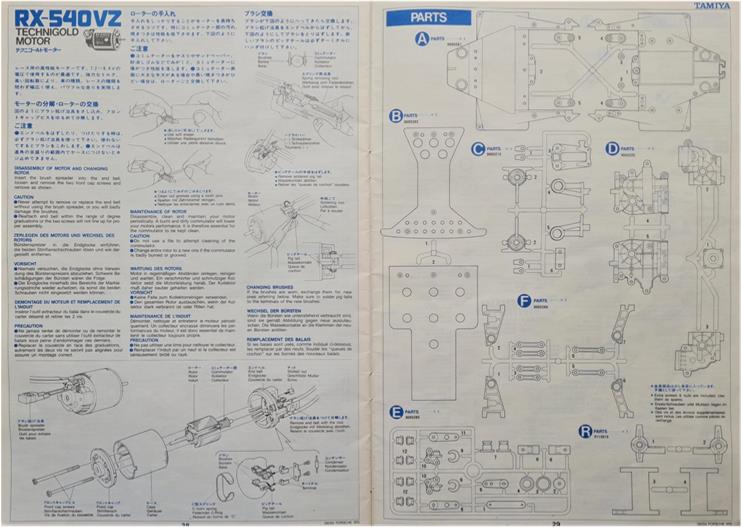
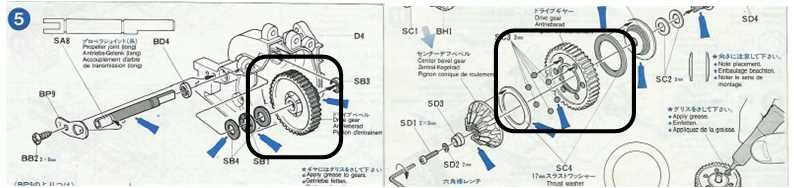
The chassis for the Porsche exists in two versions: Mk1 associated with the instruction manual identified by number 5859 and Mk2 associated with the instruction manual identified by number 58059. The two models differ as follows (on the left the images related to the Mk1 version and on the right the images related to the Mk2 version):
– the axle carrying the movement from the rear assembly to the front assembly
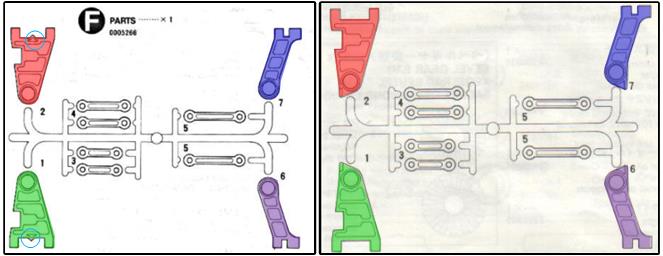
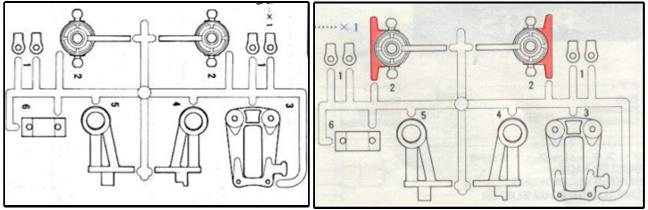
The front suspension and steering system change radically between Mk1 and Mk2; in the Mk2 version a mechanical steering end‑stop system is introduced. This results in a modification to the two steering knuckles and to the four suspension arms, both upper and lower. The parts involved are F (part number 0005266) and C (part number 9005215). Neither part changes code; part F and part C keep the same identification number for both the Mk1 and Mk2 models, therefore two different versions exist.
– part F; upper and lower arms. The parts that change between the Mk1 and Mk2 versions are highlighted: in red the left lower arm, in green the right lower arm, in blue the left upper arm and in purple the right upper arm. The lower arms feature an additional A‑shaped machining between the two slots that attach the arm to the central body (highlighted by the light‑blue circle in the image on the left).
– part C; in the Mk2 version the steering knuckles feature a T‑shaped stop (highlighted in red below) which acts as a mechanical end‑stop by resting against the tabs that appear on the arms shown above on the right.
The above is confirmed by the documents of the time: two versions of the instructions exist — on the right the 5859 version and on the left the 58059 version; the identifying code is located at the top right.
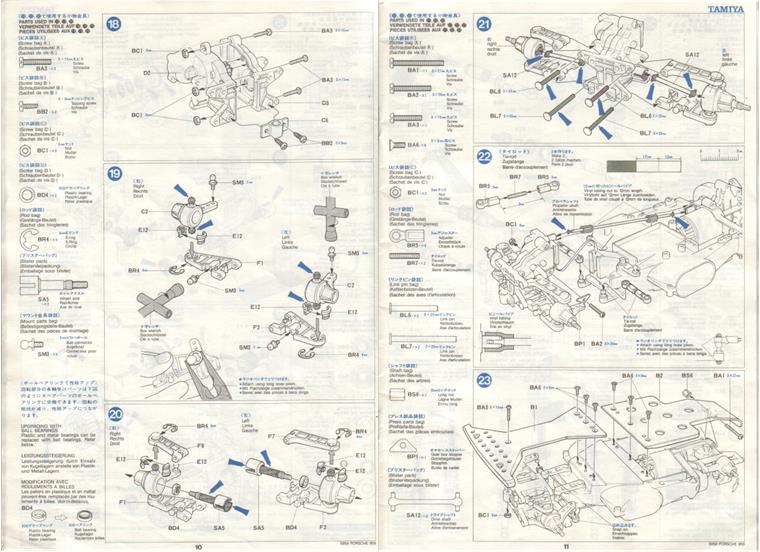
In the bill of materials for the 5859 model, the steering system and the front suspension are those of the Mk1 version.
Pages of the instruction manual for assembling the front steering and suspension system (steps 19 and 20) and the plastic parts (see sections “C” and “F”) of manual 5859, featuring the Mk1 version of the steering system and suspension arms. The number 5859 appears at the bottom right of every page.
Pages of the instruction manual for assembling the front steering and suspension system (steps 19 and 20) and the plastic parts (see sections “C” and “F”) of manual 58059, featuring the updated Mk2 version of the steering system and suspension arms. The number 58059 appears at the bottom right of every page.
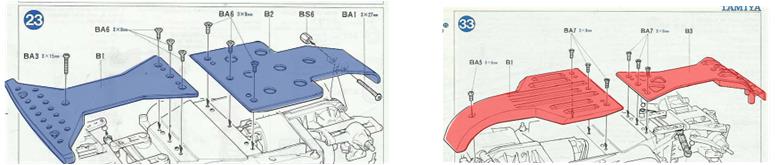
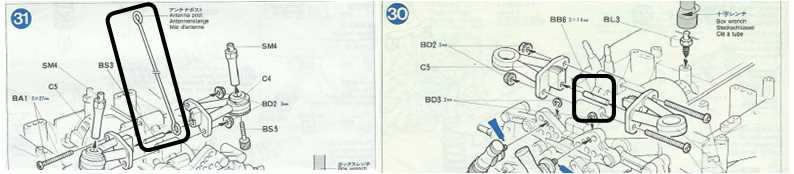
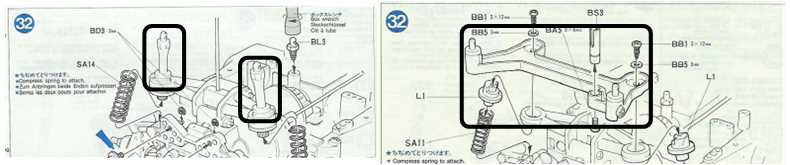
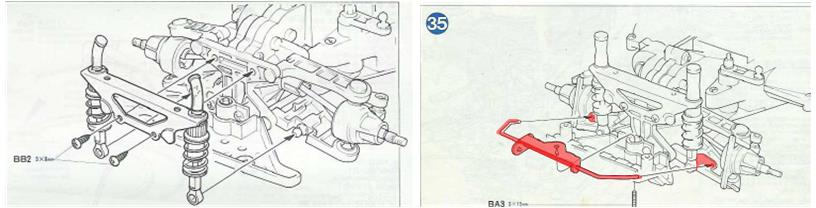
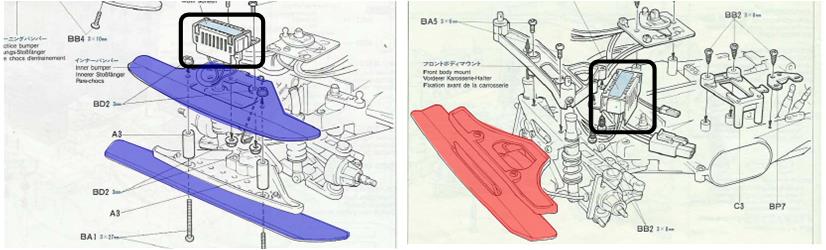
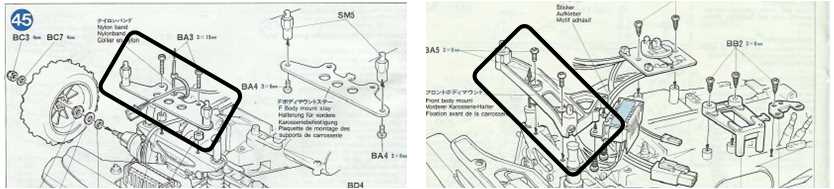
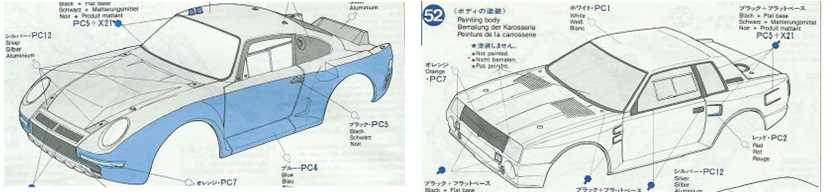
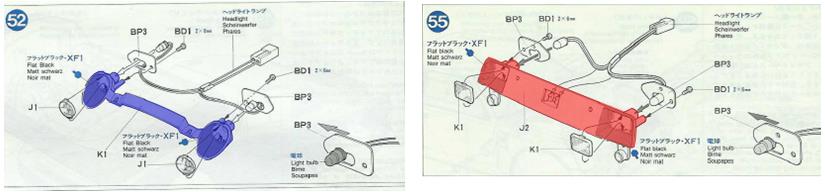
Toyota Celica Gr.B Tamiya only uses this chassis in a sister car, the Celica Gr. B model number 58064. Most of the spare parts for the Celica can be fitted to the Porsche 959. The pictures show the differences between the Celica Gr. B and the Porsche 959. The Celica certainly is the development of the Porsche In order starting from the first picture going from top to bottom, in the left column you will find the Porsche 959 highlighted in blue and in the right column the Celica Gr.B highlighted in red, the two models differ in (Left: images related to the Porsche 959 Mk2 and right: images related to the Toyota Celica Gr.B):
– central differential present on the Celica Gr.B only, Porsche has a fixed gear. This was the first major development on the second car released with this chassis
– bottom – car bumper that is divided into front and rear
– antenna only present in the Porsche 959
– rear attachments of the two bodies which, being different, have a different anchoring system to the body
– front anti-roll bar only present on the Celica Gr.B. This was the second major development on the second car released with this chassis
– installation of the MSC – mechanical speed control system, at the front for the Porsche 959 and behind the left front wheel for the Celica Gr.B – front bumper
– front attachments of the two bodies which, being different, have a different anchoring system to the car body
– body
– front light system
Tamiya, original figure, box art, guide book and catalogue are of TAMIYA INC, which does not endose or sponsor www.tamiyaclassic.com. Any brands, logos and trademarks represented on this website are the copyright of their respective owners.