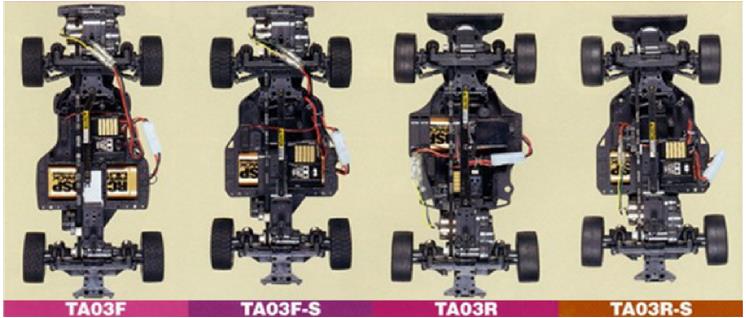
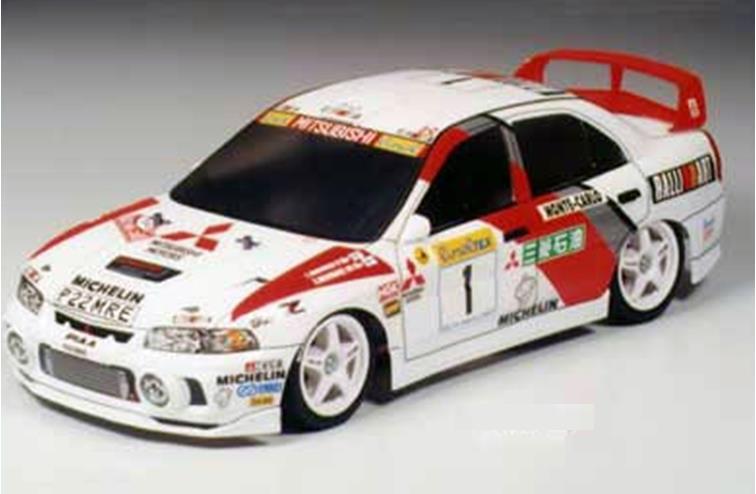
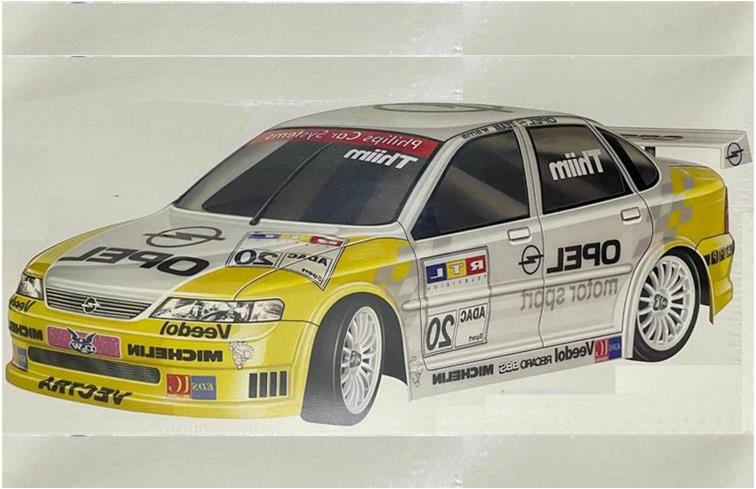
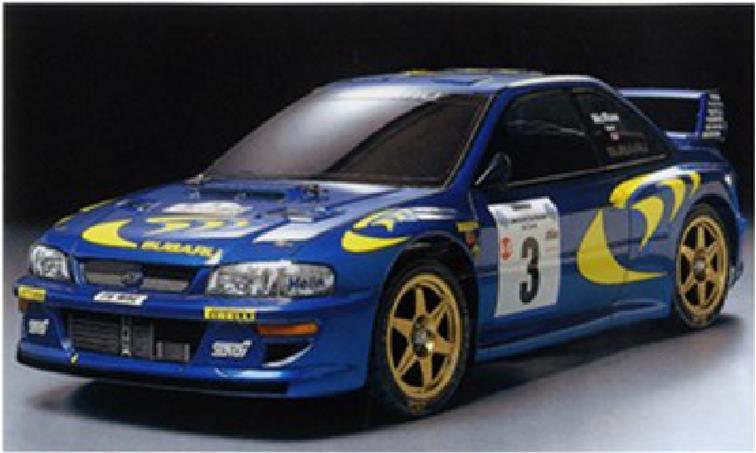
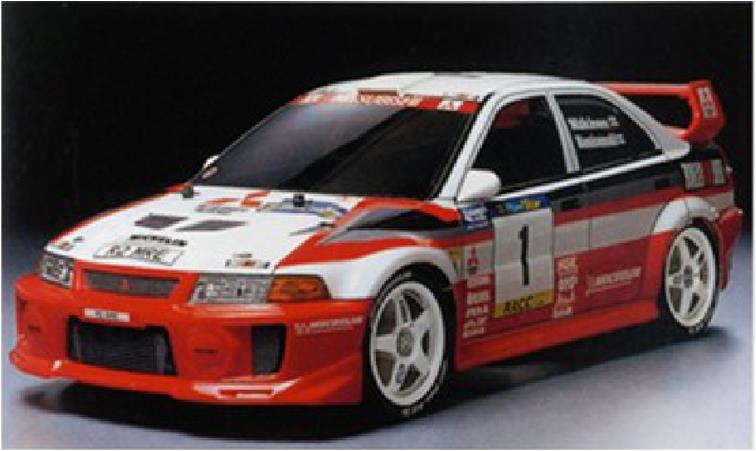
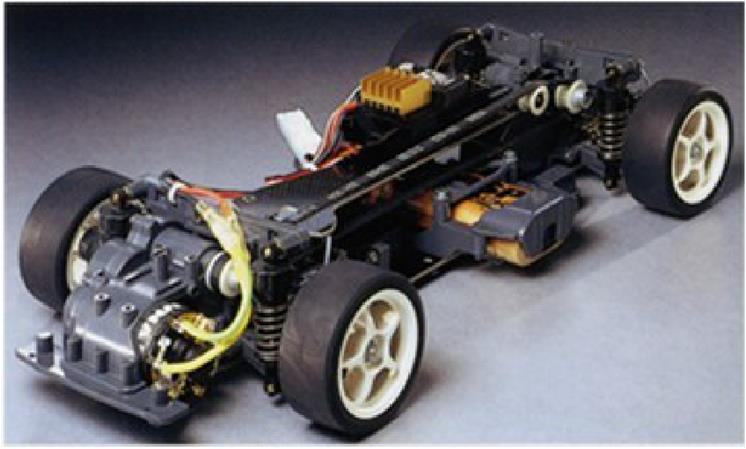
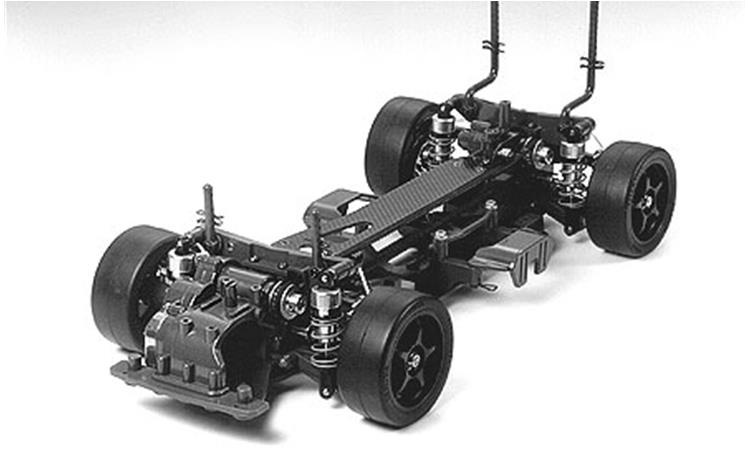
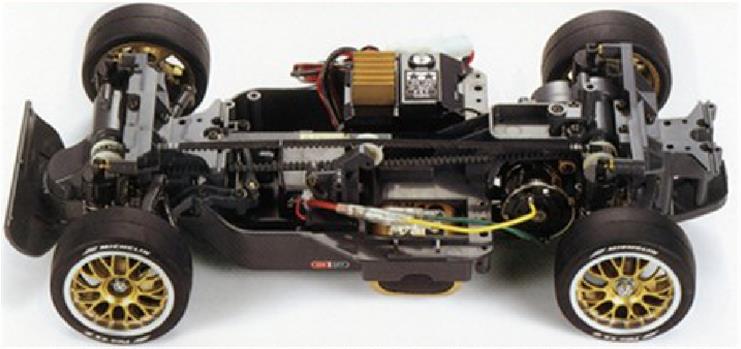
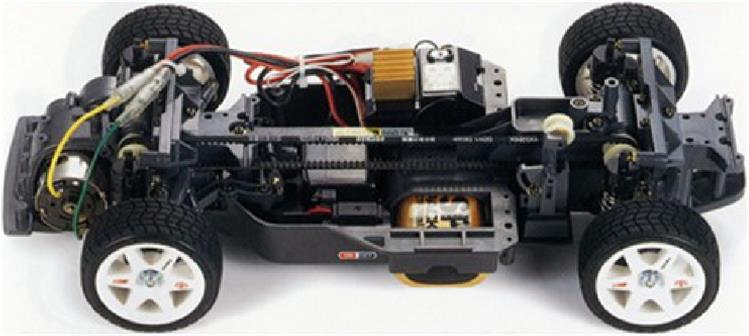
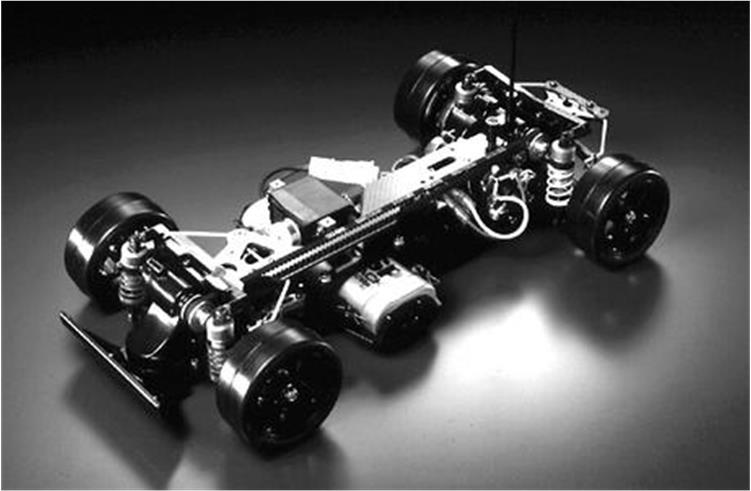
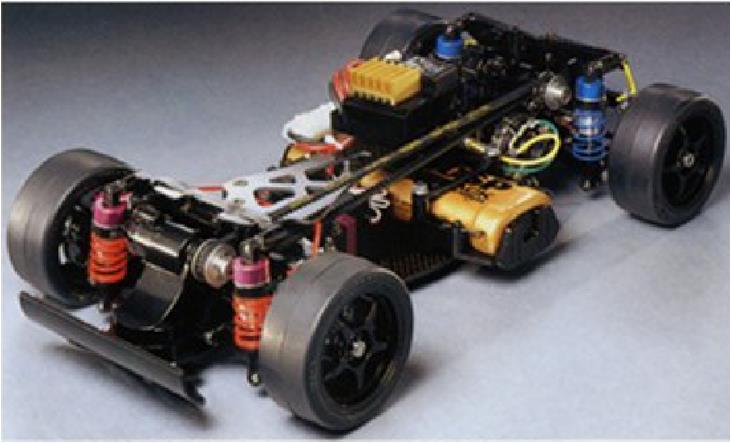
The TA-03 chassis marks a clean break from all previously developed Tamiya productions, with the transmission between the front and rear axles being entrusted for the first time to a single belt instead of a rigid shaft. The TA-03 chassis was released in various versions, which differ in electric motor position and wheelbase:
– TA-03F, where “F” stands for “front”; wheelbase of 257 mm, with the electric motor installed at the front overhang. This configuration shifts the weight distribution to the front: 60% on the front axle and 40% on the rear axle. – TA-03F-S, where “F-S” stands for “front short”; wheelbase of 237 mm, with the electric motor installed at the front overhang with a short wheelbase. This configuration achieves an optimal weight distribution: 50% on the front axle and 50% on the rear axle. – TA-03R, where “R” stands for “rear”; wheelbase of 257 mm, with the electric motor installed in the central rear. This configuration achieves an optimal weight distribution: 50% on the front axle and 50% on the rear axle. – TA-03R-S, where “R-S” stands for “rear short”; wheelbase of 237 mm, with the electric motor installed in the central rear with a short wheelbase. This configuration shifts the weight distribution to the rear: 42% on the front axle and 58% on the rear axle.
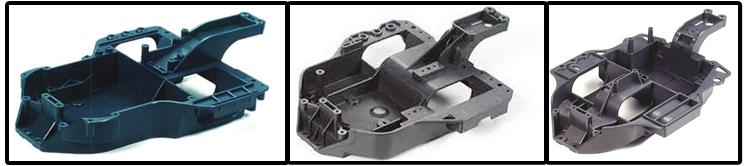
Tamiya achieves these four configurations by changing certain parts, but mainly through three different bathtub chassis models:
– Code 50719: chassis for TA-03F; located on the left in the image, – Code 50745: chassis for TA-03F-S and TA-03R-S; located in the center of the image and – Code 50768: chassis for TA-03R; located on the right in the image.
The position of the battery shifts towards the rear in the Code 50719 chassis for the F version and towards the front in the Code 50768 chassis for the R version. In the short wheelbase version, marked with the final letter S, chassis Code 50745, the battery is positioned towards the rear in the F version and towards the front in the R version because the bathtub is installed rotated 180° relative to the center of the model. This adjustment balances the electric motor position, which in the F version is always overhanging beyond the front axle and in the R version is always centrally positioned just before the rear axle.
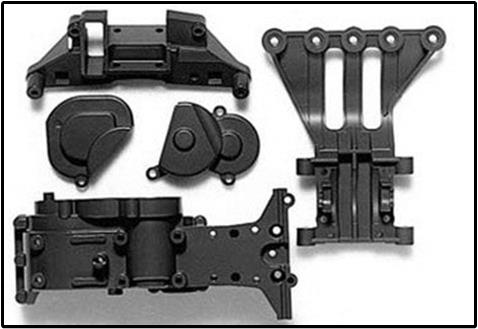
All chassis, regardless of wheelbase and electric motor position, share part A Code 50698, which is the motor gear housing. This set of parts includes:
– Bathtub for installing the differential and motor gears, – Cover for the bathtub for installing the differential and motor gears, – Plate for installing the rear shock absorbers, – Front semi-cover for transmission gear protection, – Rear semi-cover for transmission gear protection.
TA-03F The following models are part of the TA-03F version:
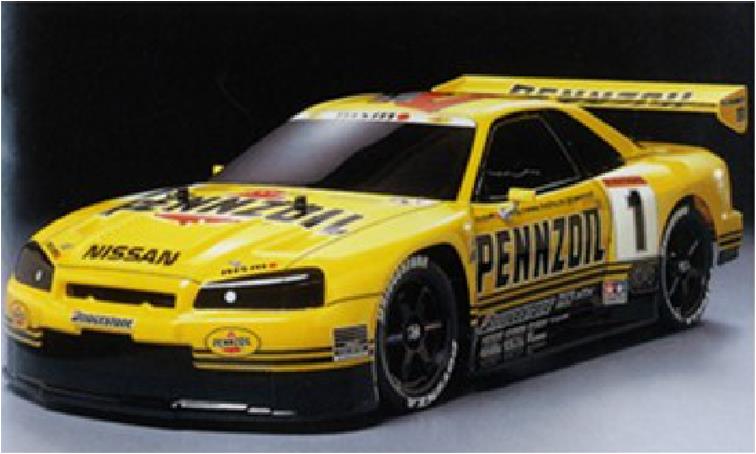
– Audi A4 STW, model number 58182, released in 1996 and available on the market until 2002; wheelbase of 257 mm, – Kure Nismo GT-R, model number 58185, released in 1996 and available on the market until 2000; wheelbase of 257 mm, – Opel Calibra Cliff, model number 58188, released in 1997 and available on the market until 2002; wheelbase of 257 mm, – Martini Alfa Romeo 155 V6 TI, model number 58189, released in 1997 and available on the market until 2002; wheelbase of 257 mm, – Mitsubishi Lancer Evolution IV, model number 58199, released in 1997 and available on the market until 1999; wheelbase of 257 mm, – Opel Vectra STW, model number 58209, released in 1997 and available on the market until 1999; wheelbase of 257 mm, – Subaru Impreza WRC, model number 58210, released in 1998 and available on the market until 2002; wheelbase of 257 mm, – Mitsubishi Lancer Evolution V WRC, model number 58225, released in 1998 and available on the market until 2000; wheelbase of 257 mm, – Pennzoil Nismo GT-R (R34), model number 58239, released in 1999 and available on the market until 2002; wheelbase of 257 mm.
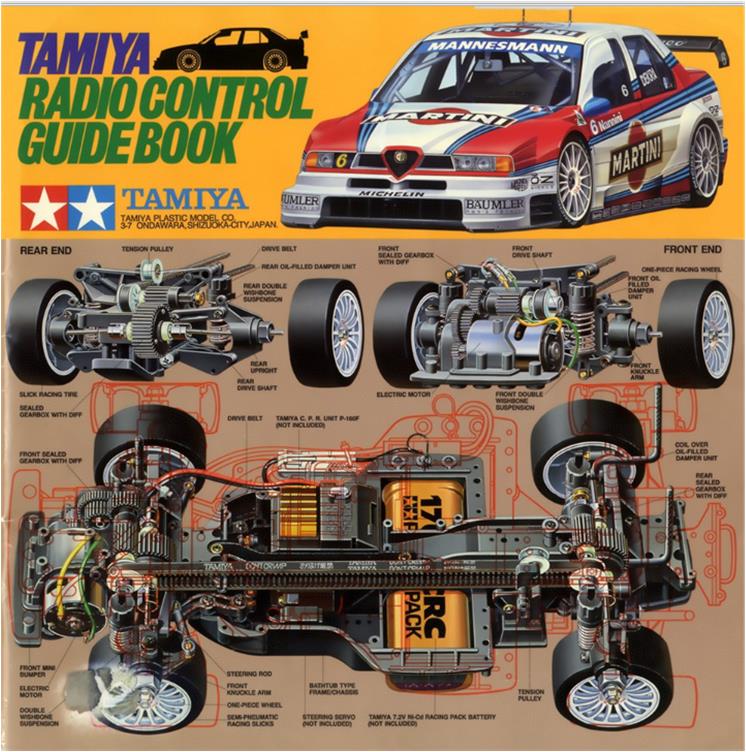
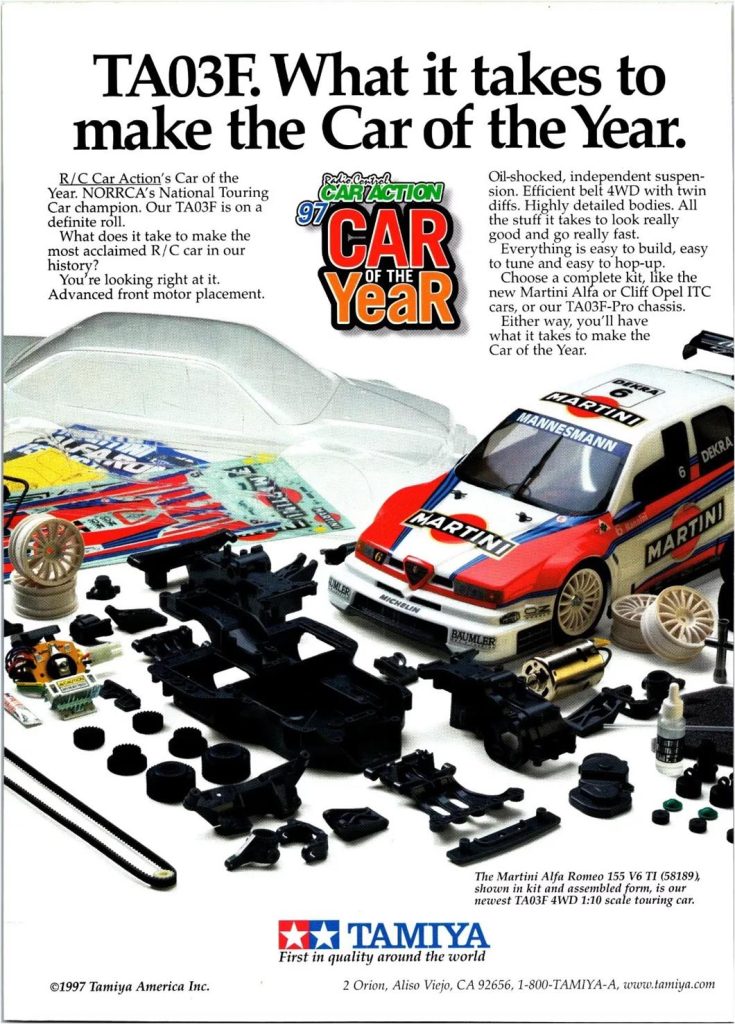
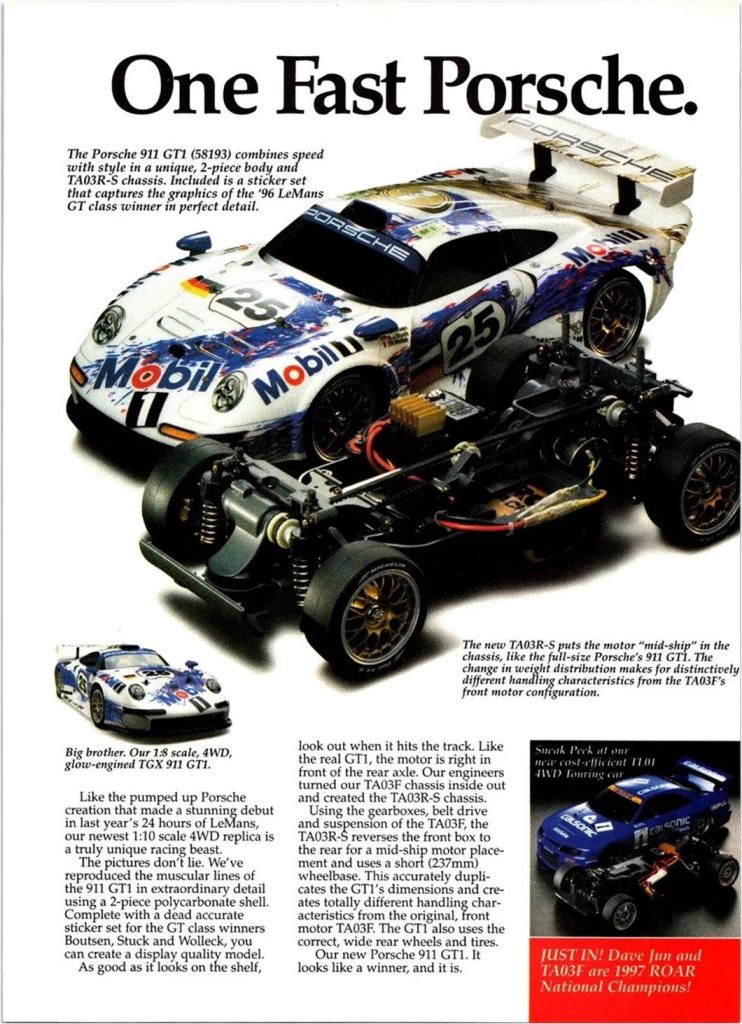
The TA-03F chassis is undoubtedly the one with the most alternatives, making it the most widespread. It represents a less high-performance evolution of the TA-03F Pro chassis, which will be discussed below. These all-wheel-drive models with belt transmission signify a significant innovation for Tamiya. The image below shows an exploded view of the TA-03F chassis with the Alfa Romeo 155 Martini body, replicating the version that competed in the 1995 German DTM.
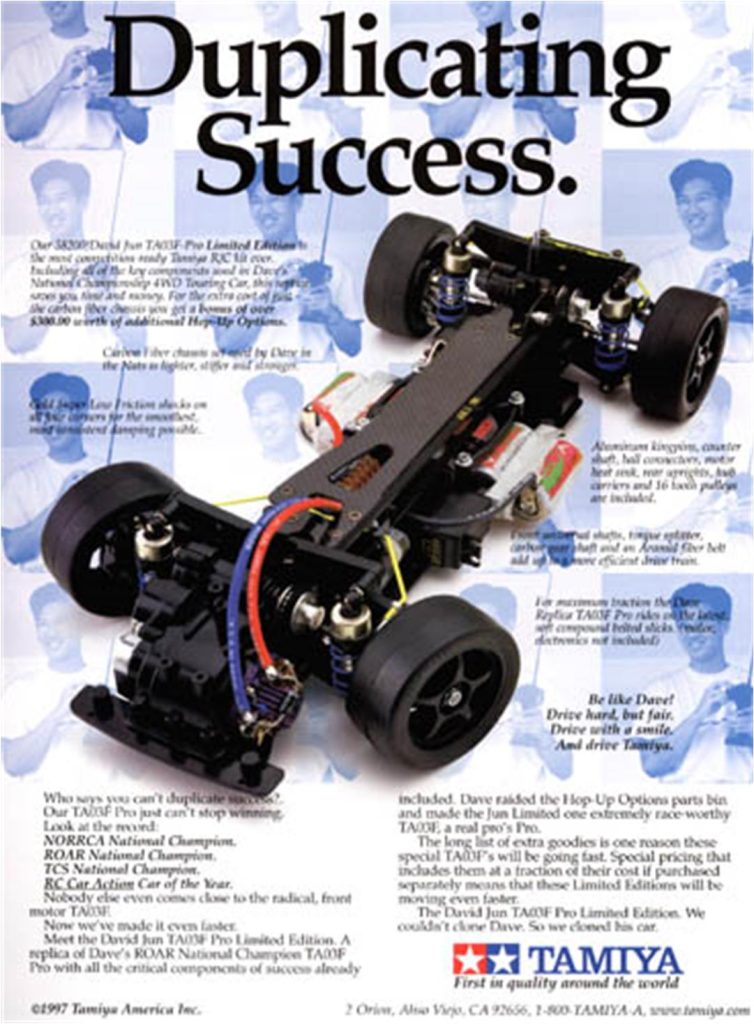
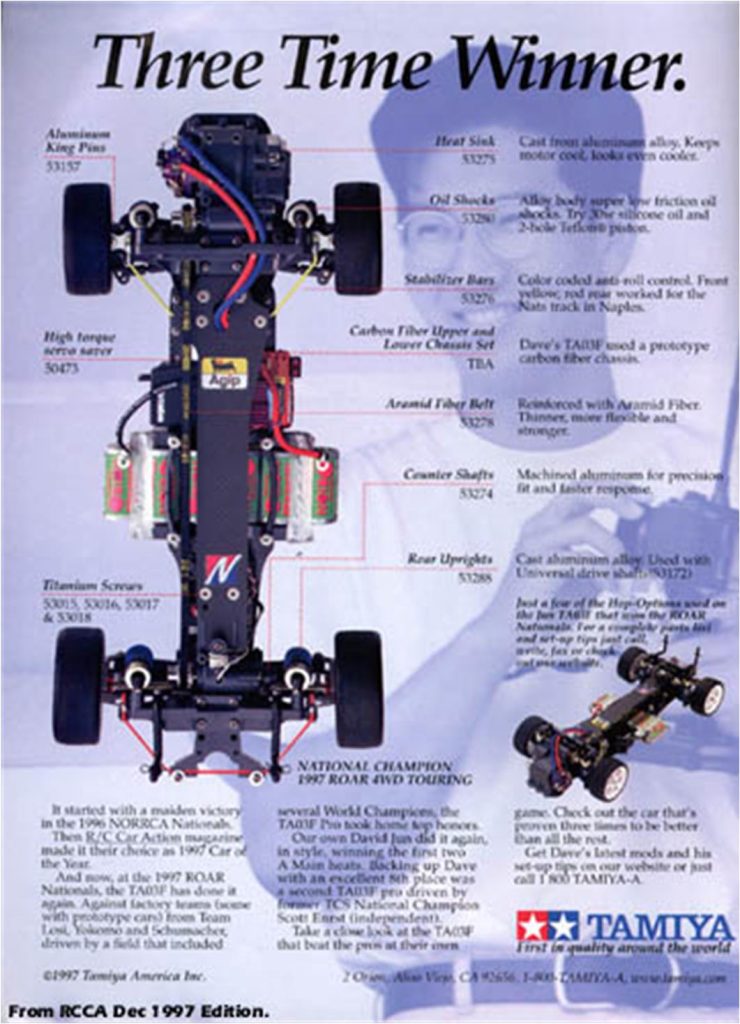
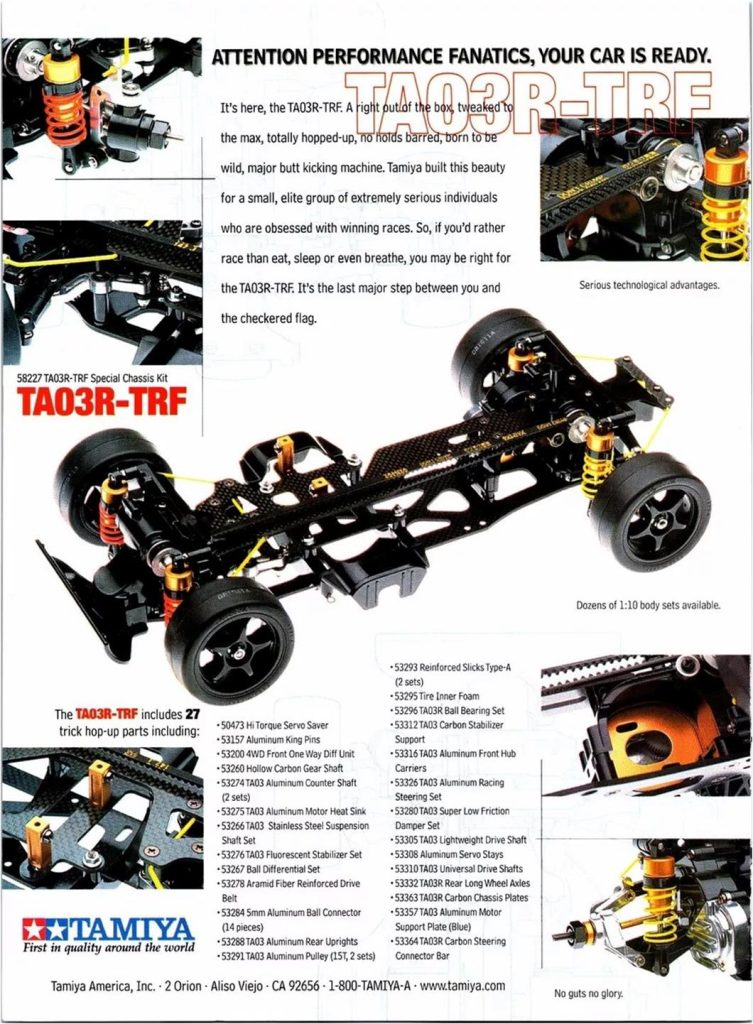
There are several advertisements that Tamiya or its various importers worldwide have published in industry magazines.
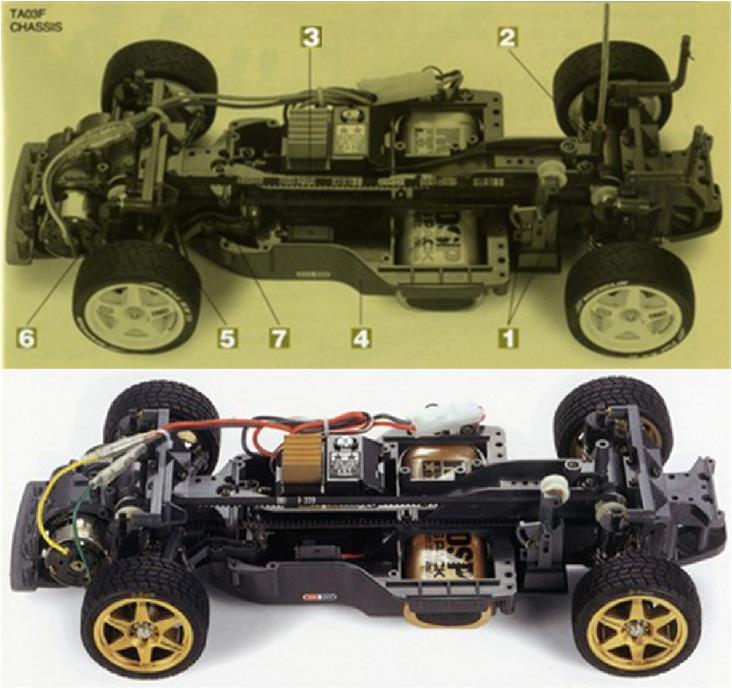
The main features of the TA-03F chassis are:
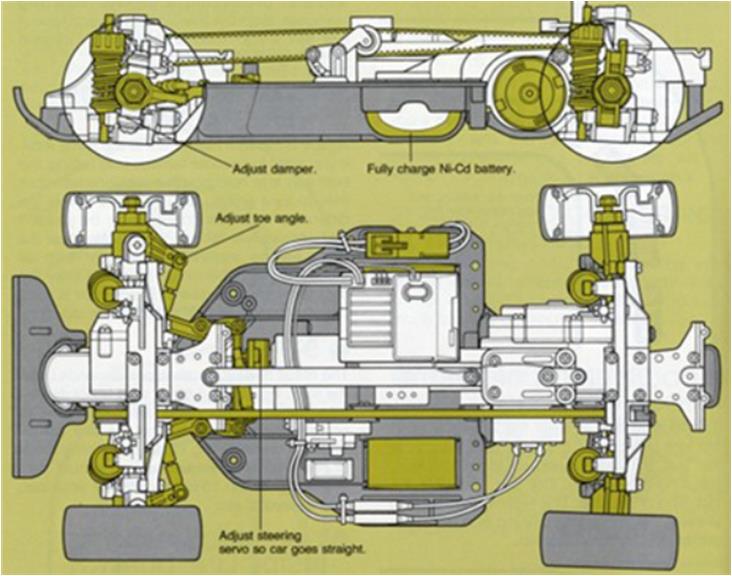
– Plastic shell-shaped chassis that houses electronics and the battery (point 4 in the image); the battery is installed toward the central rear part to balance the weight of the electric motor , which is overhanging beyond the front axle, – Belt transmission (point 3 in the image) with a 16-tooth pulley system (pulley code 53286) and a separate belt tensioner to keep it taut (point 1 in the image), – Independent rear suspension with fixed-length double wishbones and a damper for each arm (point 2 in the image) and independent front suspension with fixed-length double wishbones and a damper for each arm (point 5 in the image), – Black plastic CVA shock absorbers of the same size for both the front and rear axles, – Electric motor installed overhanging on the front axle to improve the traction of the front wheels (point 6 in the image), – Lever steering system that improves precision by ensuring the wheels have the same turning angle (point 7 in the image).
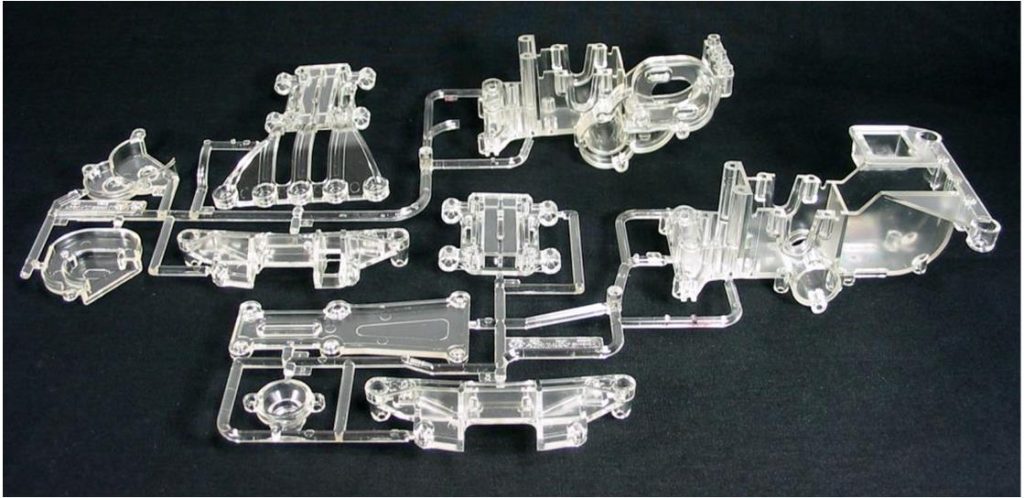
During an event in Japan, parts A and B in transparent plastic were released for sale. The two sets did not have a reference code. From some photos of the time, the identification label was handwritten in Japanese. Today (2025), these parts are impossible to find on the market.
TA-03R
The following models are part of the TA-03R version:
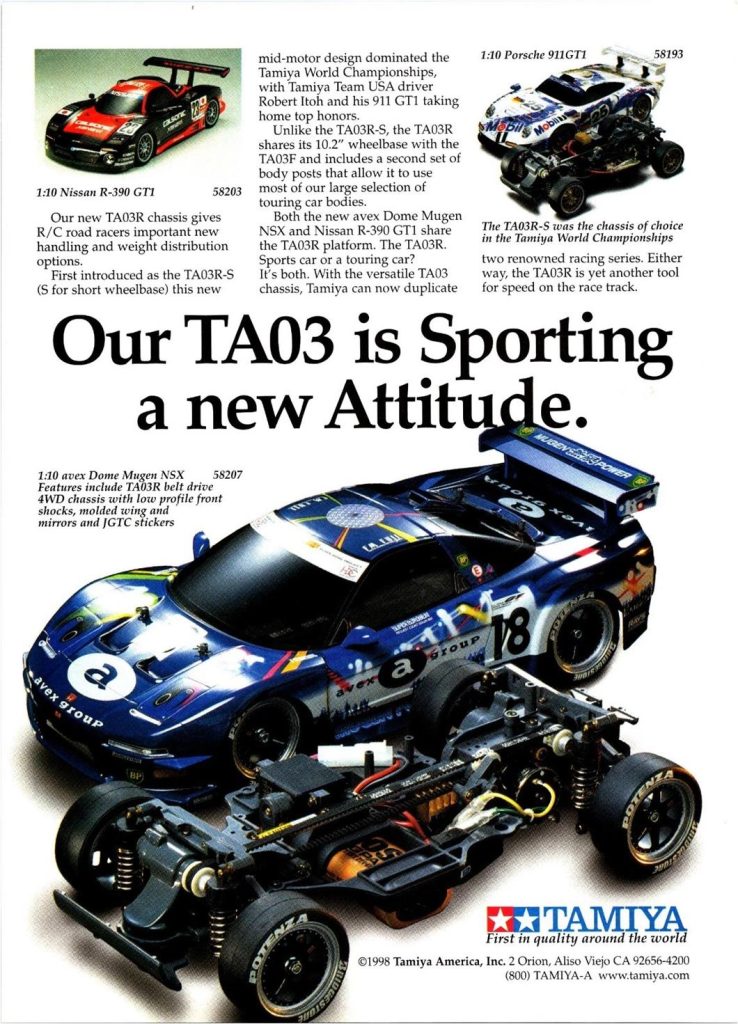
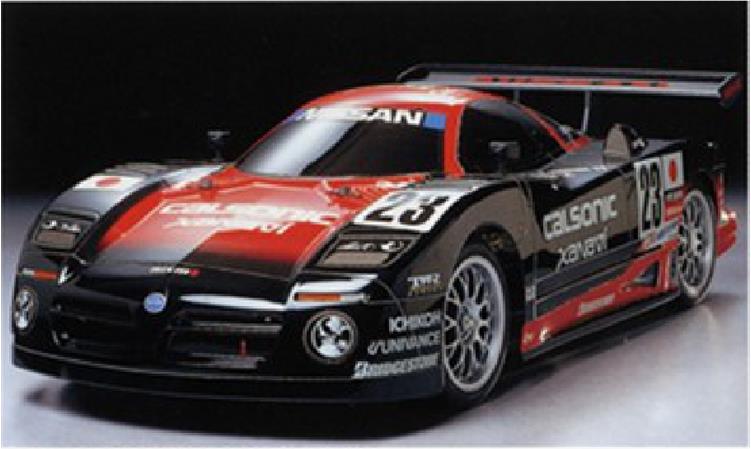
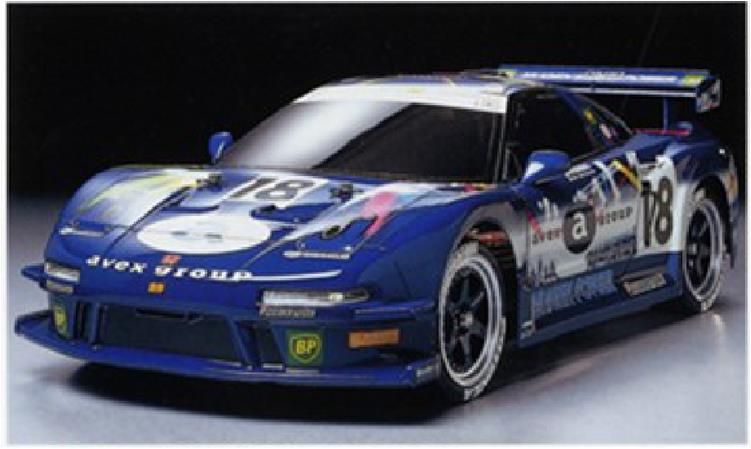
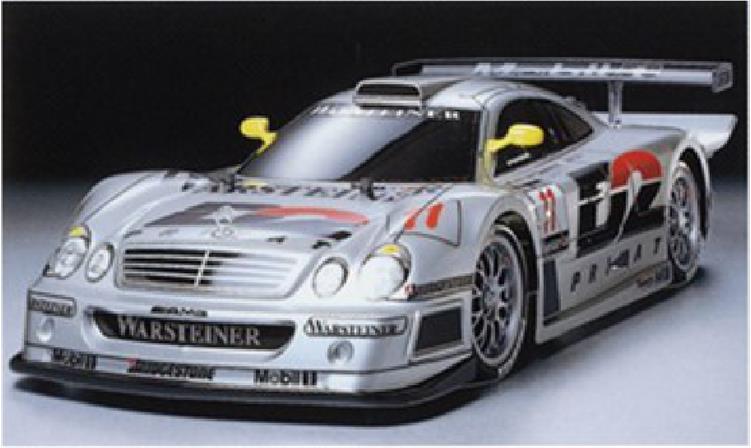
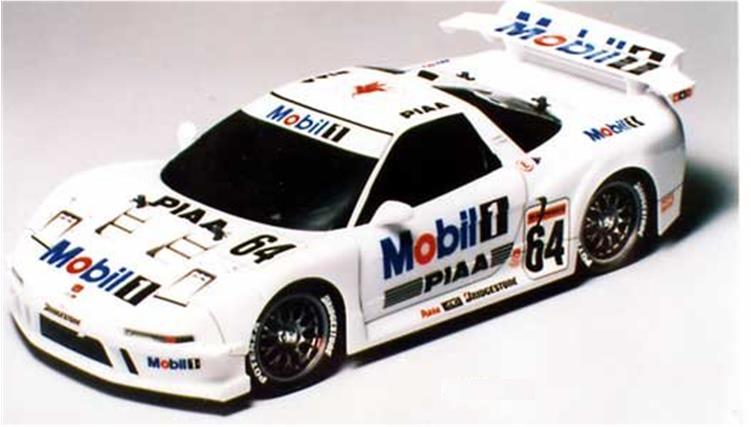
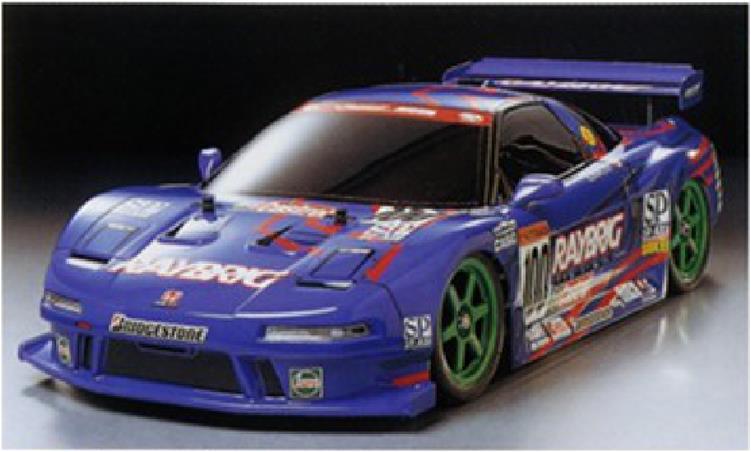
– Nissan R390 GT1, model number 58203, released in 1997 and available on the market until 2000; wheelbase of 257 mm, – Avex Dome Mugen NSX, model number 58128, released in 1997 and available on the market until 2000; wheelbase of 257 mm, – Mercedes CLK-GTR, model number 58214, released in 1998 and available on the market until 2002; wheelbase of 257 mm, – Mobil 1 NSX, model number 58220, released in 1998 and available on the market until 1999; wheelbase of 257 mm, – NSX Raybrig 1999, model number 58254, released in 1999 and available on the market until 2004; wheelbase of 257 mm.
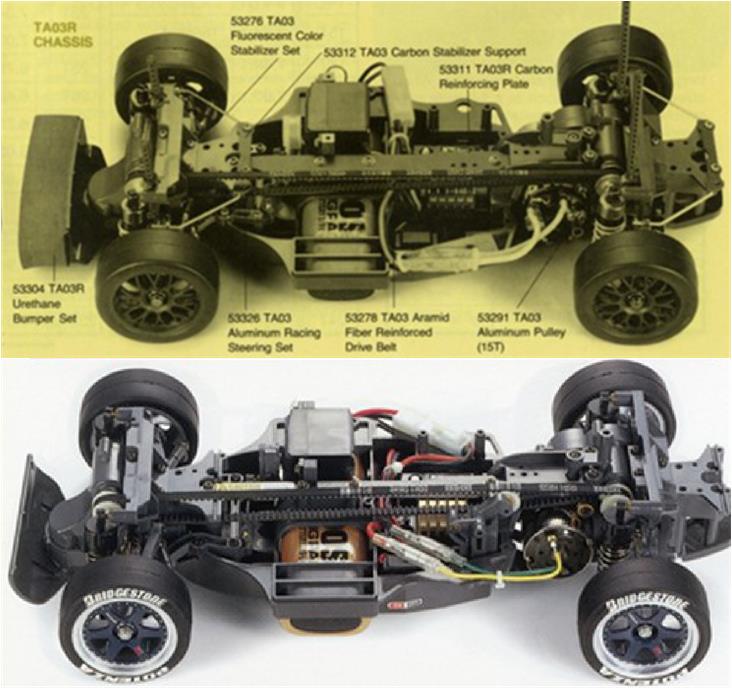
These all-wheel-drive models with belt transmission represent a very important innovation for Tamiya. Several advertisements have been published by Tamiya or its various importers worldwide in industry magazines; the image below shows the TA-03R chassis featured in a guidebook.
The main features of the TA-03R chassis are:
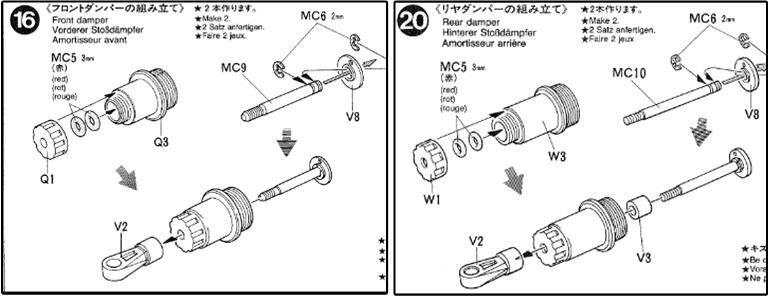
– Plastic shell-shaped chassis that houses electronics and the battery; the battery is installed toward the central front to best balance the weight of the motor, which is positioned centrally at the rear, – – Black plastic CVA shock absorbers; the R series chassis uses shorter shock absorber cylinders at the front (shown on the left in the image) compared to the rear (shown on the right in the image). Naturally, the front shock towers for installing the two absorbers are lower than the equivalent towers of the F series. This difference, along with the placement of the electric motor centrally at the rear, allows compatibility with bodys that have a lower nose compared to the bodys installed on the front-motor chassis. The TA-03F chassis is equipped with car bodies that are all modified sedans designed for track or rally racing, while the TA-03R chassis is fitted with sports car bodies derived from series production or prototypes.
– Independent rear suspension with fixed-length double wishbones and a damper for each arm, as well as independent front suspension with fixed-length double wishbones and a damper for each arm, – Belt transmission with a 15-tooth pulley system (pulley code 53291) and a separate belt tensioner to keep it taut; the R version features a system with two bearings, absent in the F version, to distance the belt from the electric motor. The TA-03R chassis cannot use a larger rear pulley because the belt would have to make a sharper curve when transitioning from the rear pulley to the two bearings. This tight curve causes premature wear, excessive friction and reduced performance. For this reason, 16-tooth pulleys are not a suitable alternative to 15-tooth pulleys on the TA-03R for adjusting belt tension, – Electric motor centrally installed towards the rear to improve the traction of the rear wheels, – Lever steering system that enhances precision by ensuring the wheels maintain the same turning angle.
TA-03F PRO
The first model of the TA-03F Pro series was released prior to all the other models in the TA-03 family; from this chassis, the TA-03F version was later developed. Since the designation immediately includes the “F,” it is clear that Tamiya already planned to release the “R” version from the beginning. The following models are part of the TA-03F Pro version:
– TA-03F Pro, model number 58177, released in 1998 and available on the market until 1999; wheelbase of 257 mm, – TA-03F Pro Special “David Jun Commemorative”, model number 58200, released in a limited series in 1999; wheelbase of 257 mm.
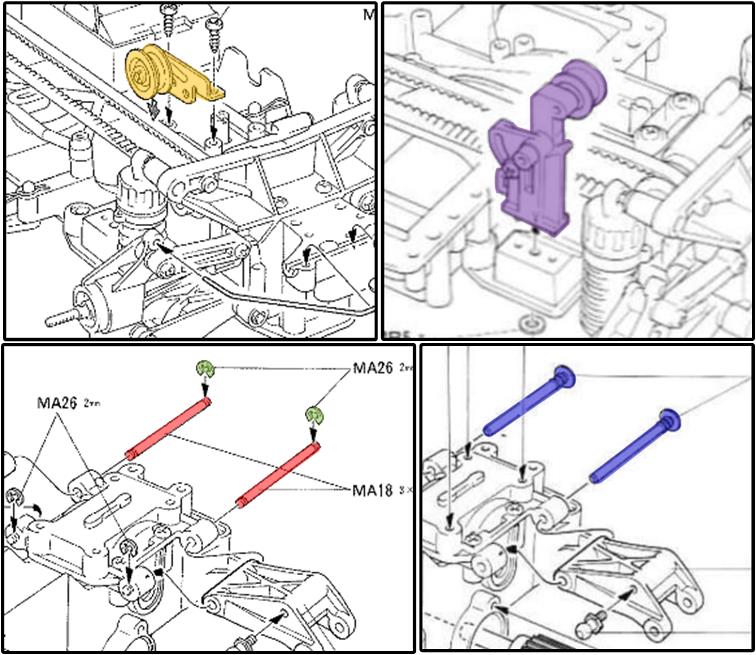
The TA-03F Pro chassis was released exclusively as a double FRP plate chassis, without body or motor, although the manual suggests installing a Dyna-Run Super Touring motor. The main features of the TA-03F Pro chassis are:
– Double FRP chassis, – Front and rear ball differentials, differing from the gear with satellite differentials installed on the TA-03F version, – Spur gear and pinion with a 0.4 module, differing from the 0.6 module installed on the TA-03F chassis, – Different belt tensioner system (highlighted in yellow in the image for the TA-03F Pro and in purple for the TA-03F), – Axle pins (highlighted in red in the image) for the four wishbone suspensions with E-clips (highlighted in green in the image), differing from the screws (highlighted in blue in the image) installed on the TA-03F chassis, – Ball bearings, differing from the metal bushings installed on the TA-03F chassis, – Anti-roll bars, which are absent on the TA-03F chassis.
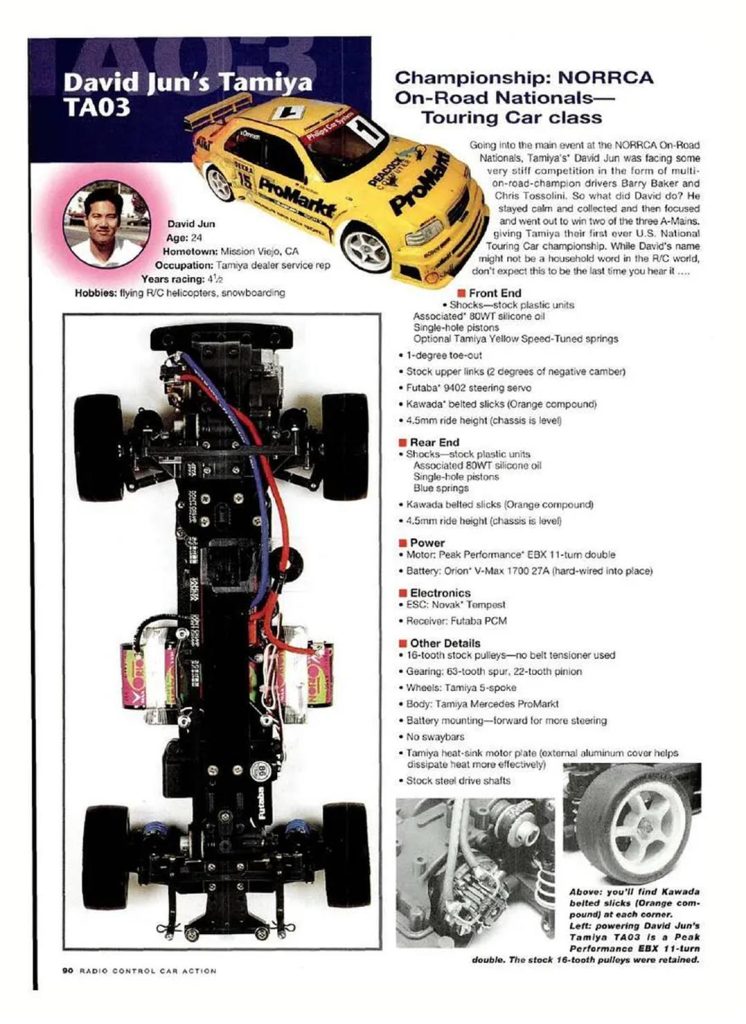
The TA-03F Pro Special chassis was released as a limited edition following David Jun’s victories, achieved while driving a modified TA-03F Pro chassis. David Jun is an official Tamiya driver and his ingenious modifications to the TA-03F Pro chassis played a fundamental role in improving its performance. This model comes equipped with all the accessories used by David Jun to enhance performance. David Jun secured four championship titles in the 1/10 Touring Car class in 1996 and 1997:
– National NORRCA Champion (National Organization for Racing Radio Controlled Autos, which organizes RC car races in the United States and Canada, categorizing participants not only by model classes but also by driver type, distinguishing between professionals and non-professionals) in the 4WD Touring category in 1996, – ROAR Champion (Remotely Operated Auto Racers or Radio Operated Auto Racing, organizing RC car races in the United States and Canada) in 1997, – NORRCA Champion in 1997, – TCS Champion (Tamiya Championship Series) in 1997.
Tamiya celebrated these victories with several articles in industry magazines.
In addition to the features listed above, the TA-03F Pro Special model differs from the base TA-03F Pro model in the following ways:
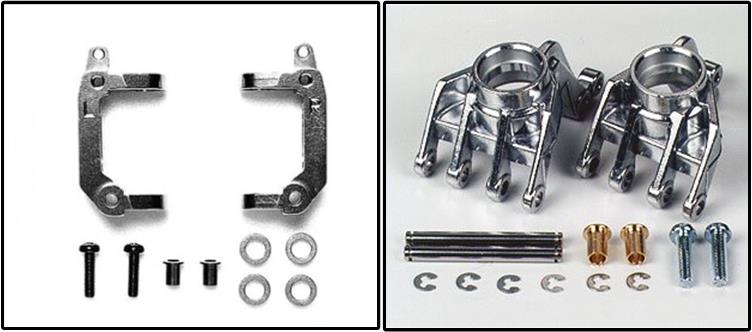
– Double carbon chassis, an evolution of the FRP version found in the TA-03F Pro version, – Silver anodized aluminum parts , – All plastics are black instead of dark gray; the difference is particularly noticeable in the plastics of the front and rear gear housings. Tamiya maintains the original gray color for all other models (TA-03R, TA-03F, TA-03R-S, TA-03F-S and TA-03F Pro). Black plastics are exclusive to the TA-03F Pro Special and TA-03R TRF and TAS-03RS TRF chassis. While the plastics retain the same code (e.g., motor housing code 50698), Tamiya created a special black version unavailable on the market, – Four aluminum low-friction shock absorbers with blue springs; the shock absorbers are the same size for the front and rear axles. A set of 4 shock absorbers is available as an accessory to enhance performance; accessory code 53280, described as “TA-03 super low friction damper set 4 pcs,” – Front C-hub made of aluminum to reduce the unsprung mass of the suspension and improve its mechanical resistance (shown on the left in the image). This hub is available as an accessory to enhance performance; accessory code 53316, described as “TA-03 front hub carrier 1 pair,” – Rear hub made of aluminum to reduce the unsprung mass of the suspension and improve its mechanical resistance (shown on the right in the image). This hub is available as an accessory to enhance performance; accessory code 53288, described as “TA-03 aluminium rear up right 1 pair.”
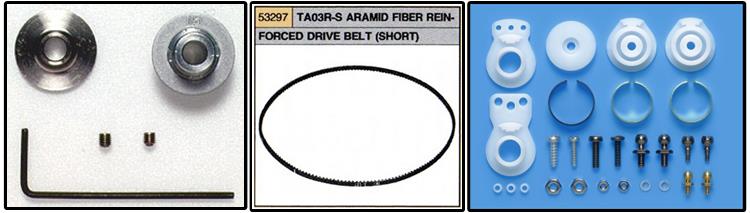
– 16-tooth ainum pulleys (pulley code 53286) to reduce belt and pulley wear, minimizing transmission play between the front and rear, – Aramid fiber reinforced drive belt, which is synthetic and durable. It is commonly used in protective tear-resistant clothing, aerospace and construction sectors. This belt allows for the omission of the belt tensioner. Available as an accessory to enhance performance; accessory code 53297, described as “TA-03R-S aramid fiber reinforced drive belt short,” – Servo saver with metal shock rings, replacing the version in the TA-03F Pro that features a single Teflon ring. Accessory code 50473, described as “Rc Hi-Torque Servo Saver.”
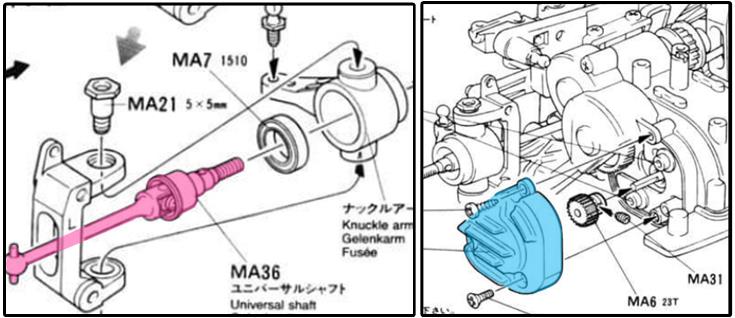
– Aluminum motor heat sink (highlighted in blue in the image) to better dissipate the heat generated by electric motors used in racing. This plate is available as an accessory to enhance performance; accessory code 53275, described as “TA-03 aluminium motor heat sink,” – One-piece front drive shafts (highlighted in pink in the image), – Front one-way bearings to improve the turning radius in tight corners.
TA-03R-S
This is the first short-wheelbase variant (237 mm) available on the market, released even before the TA-03R version with a standard wheelbase (257 mm). The following models are part of the TA-03R-S version:
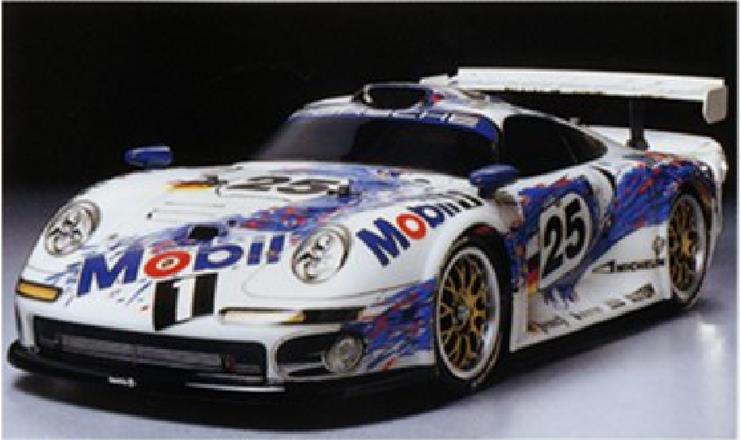
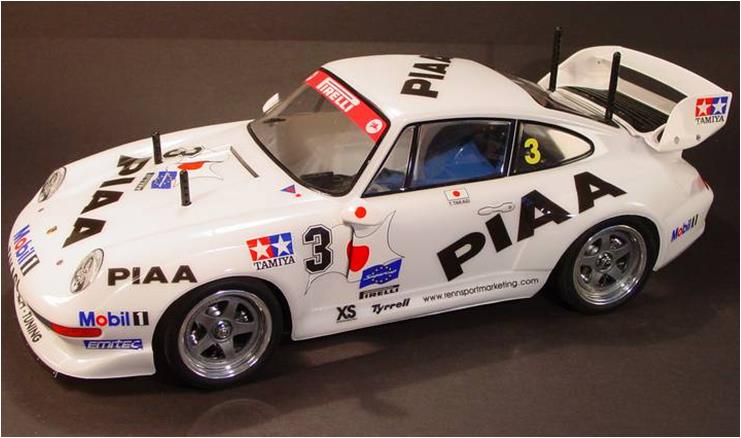
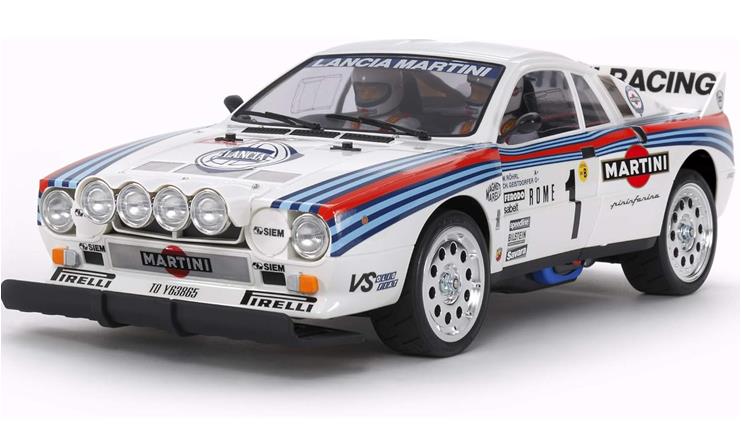
– Porsche 911 GT1, model number 58193, released in 1997 and available on the market until 2002; wheelbase of 237 mm, – PIAA Porsche 911, model number 58215, released in 1998 and available on the market until 1999; wheelbase of 237 mm, – Lancia 037 Rally, model number 58278, released in 2001 and available on the market until 2004; wheelbase of 237 mm.
The main features of the TA-03RS chassis are:
– Compact plastic shell-shaped chassis, specifically designed for short-wheelbase frames, identical for both the R and F versions; code 50745. The chassis houses electronics and the battery; the battery is installed toward the central front to optimally balance the weight of the motor located centrally at the rear, – Black plastic CVA shock absorbers; the R series chassis uses shorter shock absorber cylinders at the front (shown on the left in the image) compared to the rear (shown on the right in the image). Naturally, the front shock towers for installing the absorbers are lower than their counterparts in the F series. This difference, along with the placement of the motor centrally at the rear, allows compatibility with bodys featuring lower noses, compared to those installed on front-motor chassis. The TA-03FS chassis is equipped with modified utility car bodies for rally racing, while the TA-03RS chassis is fitted with sports car bodies derived from series production or prototypes.
– Independent rear suspension with fixed-length double wishbones and a damper for each arm, as well as independent front suspension with fixed-length double wishbones and a damper for each arm, – Short belt transmission with a pulley system (pulley code 53291) featuring 15-tooth pulleys and a separate belt tensioner to maintain tension; the R-S version includes a system with two bearings, absent in the F version, to distance the belt from the electric motor. The TA-03R-S chassis cannot use larger rear pulleys because the belt would have to make a tighter curve when transitioning from the rear pulley to the two bearings. This tight curve leads to premature wear, excessive friction and reduced performance. For this reason, 16-tooth pulleys are not a viable alternative to the 15-tooth pulleys on the TA-03R-S for adjusting belt tension, – Electric motor centrally positioned towards the rear to improve the traction of the rear wheels, – Lever steering system that enhances precision by ensuring the wheels maintain the same turning angle.
TA-03F-S
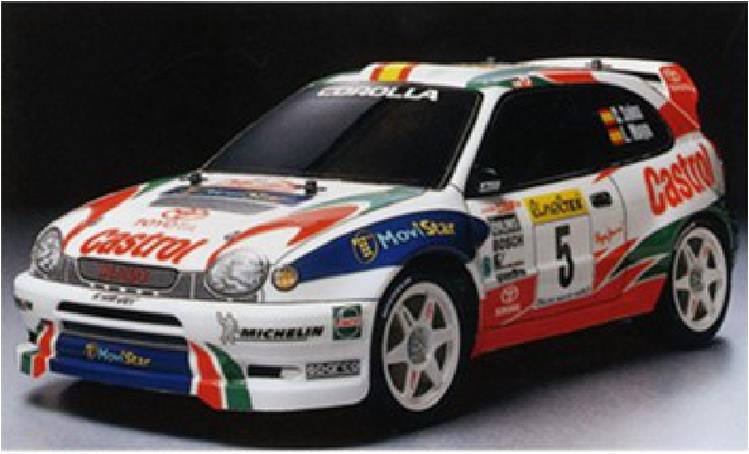
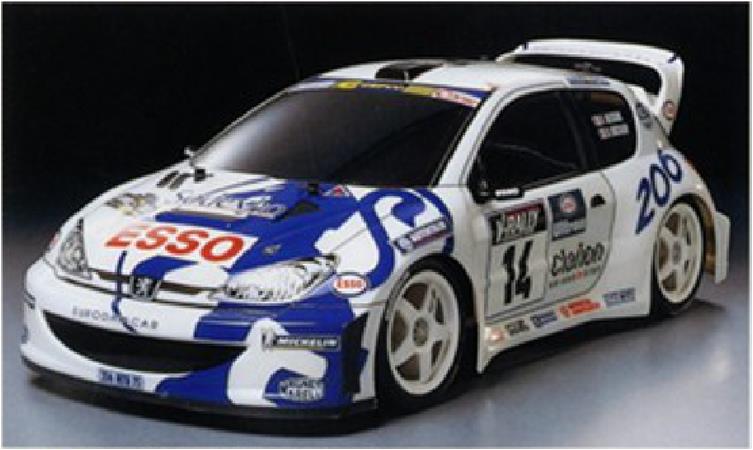
This is the short-wheelbase variant (237 mm) of the TA-03F version with a standard wheelbase (257 mm). The following models are part of the TA-03F-S version:
– Toyota Corolla WRC, model number 58218, released in 1998 and available on the market until 2002; wheelbase of 237 mm, – Peugeot 206 WRC, model number 58250, released in 1999 and available on the market until 1999; wheelbase of 237 mm.
The main features of the TA-03FS chassis are:
– Compact plastic shell-shaped chassis, specifically developed for short-wheelbase frames, identical for both the R and F versions; code 50745. The chassis houses electronics and the battery; the battery is installed toward the central rear to balance the weight of the electric motor , which is overhanging beyond the front axle, – Short belt transmission with a 16-tooth pulley system (pulley code 53286) and a separate belt tensioner to maintain tension, – Independent rear suspension with fixed-length double wishbones and a damper for each arm, as well as independent front suspension with fixed-length double wishbones and a damper for each arm, – Black plastic CVA shock absorbers of the same size for both the front and rear axles, – Electric motor installed overhanging on the front axle to improve the traction of the front wheels, – Lever steering system that enhances precision by ensuring the wheels maintain the same turning angle.
TA-03R TRF
The TA-03R TRF is the first model distinguished by the acronym TRF, which stands for Tamiya Racing Factory. This family includes only one model:
– TA-03R TRF, model number 58227, released in 1998 and available on the market until 2000; wheelbase of 257 mm.
This model is very important for Tamiya because it made available to the general public a factory-equipped model with many accessories designed to improve performance. Tamiya published several advertisements and articles in industry magazines.
The TA-03R TRF chassis was released solely as a double fiber plate chassis, without body or motor, although the manual suggests installing a Dyna-Run Super Touring motor. With this version, Tamiya introduced to the R series all the performance upgrades featured in the TA-03F Pro Special Edition model number 58200.
The main features of the TA-03R TRF chassis are:
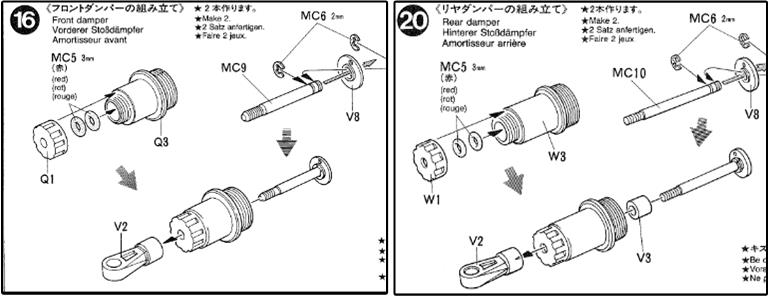
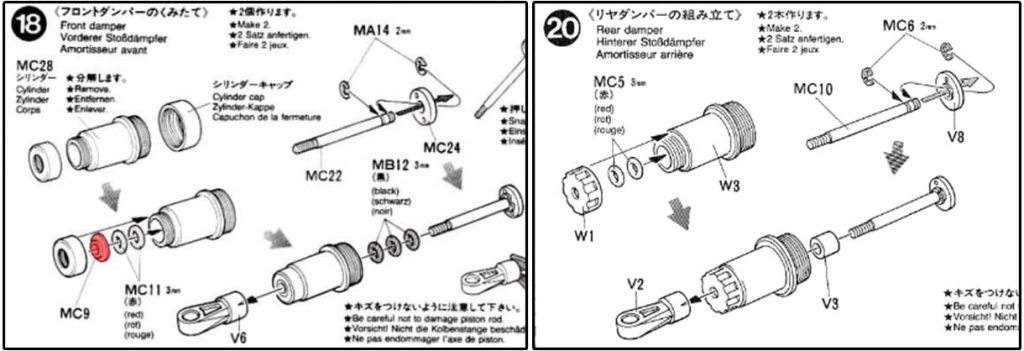
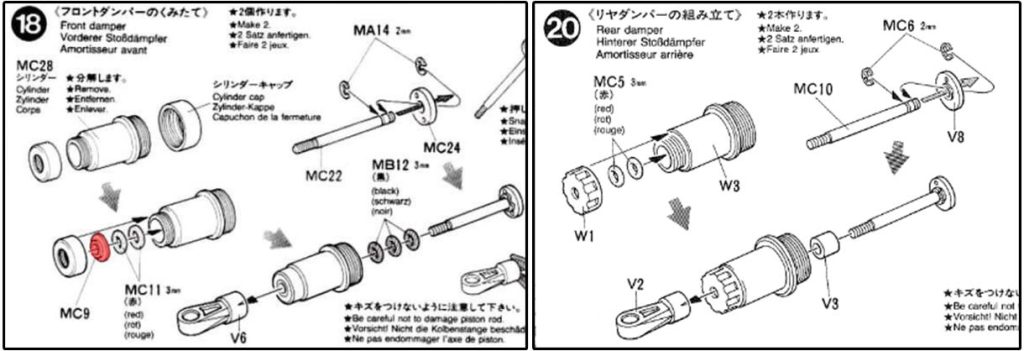
– Chassis made of double carbon plates, which houses electronics and the battery; the battery is installed toward the central front to optimally balance the weight of the motor located centrally at the rear, – Gold anodized aluminum parts, – Black plastics instead of dark gray, with the difference being particularly noticeable in the front and rear gear housing plastics. Tamiya maintains the original gray color for all other models (TA-03R, TA-03F, TA-03R-S, TA-03F-S and TA-03F Pro). The black plastic components are unique to the TA-03F Pro Special, TA-03R TRF and TA-03RS TRF chassis. While the plastics retain the same code (e.g., motor housing code 50698), Tamiya produced a special black version unavailable on the market, – Aluminum low-friction shock absorbers; R series chassis feature shorter front shocks compared to the rear. With aluminum shocks, shorter cylinders are not available, so Tamiya achieved the shortening of the front shocks by inserting a spacer (part MC9, highlighted in red in the image). Naturally, the front shock towers for installing the absorbers are lower than their counterparts in the F series. This difference, along with the placement of the motor centrally at the rear, allows compatibility with bodyworks featuring lower noses compared to those installed on front-motor chassis.
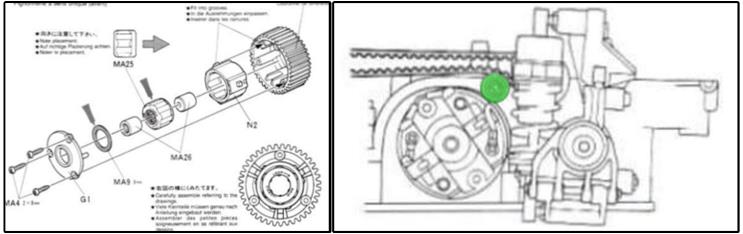
– Shock absorbers with springs of varying stiffness, red at the front and yellow at the rear, – Independent rear suspension with fixed-length double wishbones and a damper for each arm, as well as independent front suspension with fixed-length double wishbones and a damper for each arm, – Belt transmission with a 15-tooth pulley system (pulle code 53291) and a separate belt tensioner to maintain tension; the R version includes a system with two bearings (highlighted in green in the image) to distance the belt from the electric motor, which is absent in the F version. The TA-03R chassis cannot use larger rear pulleys because the belt would need to make a tighter curve transitioning from the rear pulley to the two bearings. This tighter curve results in premature wear, excessive friction and reduced performance. For this reason, 16-tooth pulleys are not a viable alternative to the 15-tooth pulleys on the TA-03R for adjusting belt tension, – Engine centrally installed at the rear to improve the traction of the rear wheels, – Front one-way differential, available as an accessory to enhance performance; accessory code 53200, described as “4WD front one-way diff unit” (shown on the left in the image), – Aluminum lever steering system, hich improves precision by ensuring the wheels maintain the same turning angle. Aluminum lever assemblies are available as an accessory to enhance performance; accessory code 53326, described as “TA-03 Aluminium racing steering set.”
TA-03R-S TRF
The TA-03R-S TRF is the short-wheelbase version of the TA-03R TRF model, with TRF standing for Tamiya Racing Factory. This family includes only one model:
– TA-03R-S TRF, model number 58243, released in 1999 and available on the market until 2001; wheelbase of 237 mm.
The TA-03R-S TRF chassis was released solely as a double carbon plate short-wheelbase chassis, without body or motor, although the manual suggests installing a Dyna-Run Super Touring motor. With this version, Tamiya introduced to the short-wheelbase R series all the performance upgrades featured in the TA-03F Pro Special Edition model number 58200 and the TA-03R TRF model number 58227.
The main features of the TA-03R-S TRF chassis are:
– Chassis made of double carbon plates in a short-wheelbase configuration, housing electronics and the battery; the battery is installed toward the central front to optimally balance the weight of the motor located centrally at the rear, – Gold and blue anodized aluminium parts, – Black plastics instead of dark gray, with the difference being particularly noticeable in the front and rear gear housing plastics. Tamiya maintains the original gray color for all other models (TA-03R, TA-03F, TA-03R-S, TA-03F-S and TA-03F Pro). The black plastic components are unique to the TA-03F Pro Special, TA-03R TRF and TA-03RS TRF chassis. While the plastics retain the same code (e.g., motor housing code 50698), Tamiya produced a special black version unavailable on the market, – Aluminum low-friction shock absorbers; R series chassis feature shorter front shocks compared to the rear. With aluminum shocks, shorter cylinders are not available, so Tamiya achieved the shortening of the front shocks by inserting a spacer (part MC9, highlighted in red in the image). Naturally, the front shock towers for installing the absorbers are lower than their counterparts in the F series. This difference, along with the placement of the motor centrally at the rear, allows compatibility with bodyworks featuring lower noses compared to those installed on front-motor chassis.
– Shock absorbers with springs of varying stiffness, red at the front and blue at the rear. Additionally, the color of the shock absorber heads differs: magenta at the front and blue at the rear, – Independent rear suspension with fixed-length double wishbones and a damper for each arm, as well as independent front suspension with fixed-length double wishbones and a damper for each arm, – Belt transmission with a 15-tooth pulley system (pulley code 53291) and a separate belt tensioner to maintain tension. The R-S version includes a system with two bearings (highlighted in green in the image) to distance the belt from the electric motor, absent in the F version. The TA-03R-S chassis cannot use larger rear pulleys because the belt would need to make a tighter curve transitioning from the rear pulley to the two bearings. This tighter curve results in premature wear, excessive friction and reduced performance. For this reason, 16-tooth pulleys are not a viable alternative to 15-tooth pulleys on the TA-03R-S for adjusting belt tension, – Engine centrally positioned at the rear, improving the traction of the rear wheels, – Front one-way differential, available as an accessory to enhance performance; accessory code 53200, described as “4WD front one-way diff unit” (shown on the left in the image), – Aluminum lever steering system, which improves precision by ensuring the wheels maintain the same turning angle. Aluminum lever assemblies are available as an accessory to enhance performance; accessory code 53326, described as “TA-03 Aluminium racing steering set.”
Tamiya, original figure, box art, guide book and catalogue are of TAMIYA INC, which does not endose or sponsor www.tamiyaclassic.com. Any brands, logos and trademarks represented on this website are the copyright of their respective owners.